
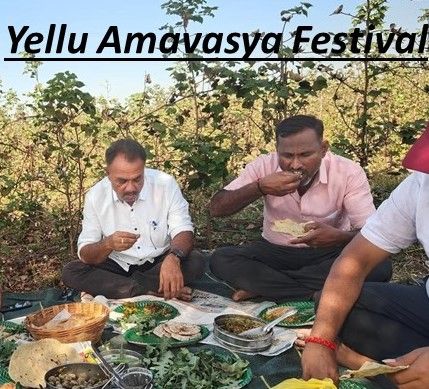
The Yellu Amavasya Festival is one of Karnataka’s most treasured cultural celebrations, deeply rooted in the traditions of farming communities. Observed on the new moon day (Amavasya) in December or January, it marks the end of the Kharif season and serves as a heartfelt thanksgiving to Mother Earth for her bounty, while invoking Blessings for Prosperity in the Coming Year.
Occasion of Yellu Amavasya
The festival coincides with Margashirsh Amavasya, a spiritually important day in the Hindu calendar. For farmers, it symbolizes the completion of the harvest cycle and the beginning of preparations for the next agricultural season. The name itself reflects its essence: “Yellu” means sesame, a crop central to the rituals, while “Amavasya” refers to the new moon day.
Celebration of Yellu Amavasya
The day begins with puja at home, followed by visits to the Maruto temple. Later, families head to their fields carrying festive dishes, where rituals and feasting unfold. In many households, cattle are also worshipped, acknowledging their indispensable role in farming. The celebrations blend devotion, gratitude, and joy, creating a vibrant atmosphere across villages.
Preparations for the Festival
Preparations begin days in advance. Homes are cleaned, decorated, and new clothes are purchased. The culinary traditions of Yellu Amavasya are especially noteworthy, with dishes that highlight pulses, greens, and sesame. Some delicacies include:
- Yellu Holige — sweet pancake made with sesame
- Jolada Kadabu — steamed dumplings of jowar flour
- Hindi Pallya — curry made with groundnuts
- Sajji Rotti — flatbread made from pearl millet
- Chikki — crunchy jaggery and nut sweet
These dishes are carried to the fields, where families share them in a picnic-like celebration, reinforcing bonds of kinship and community.
Rituals in Yellu Amavasya
The rituals are rich in symbolism. Farmers select five smooth stones from their fields and worship them as divine representations. A portion of food is offered to Mother Earth by scattering it in all directions, accompanied by chants of “Hovilgol” and “Surambagigol.” This ritual, known as Charga Chellodu, embodies gratitude and reverence.
Another unique practice involves sprinkling sesame and jaggery across the fields. This act nourishes worms and insects, ensuring ecological balance and soil fertility for future crops. Such rituals highlight the farmers’ deep understanding of sustainability and the interconnectedness of life.
Social and Cultural Significance
Beyond rituals, Yellu Amavasya is a festival of togetherness. Families from cities return to ancestral villages, while others gather in gardens or public spaces. It becomes a joyous reunion filled with food, laughter, and tradition. The festival strengthens community ties and preserves cultural heritage.
Conclusion
The Yellu Amavasya Festival stands as a vibrant reminder of the symbiotic relationship between humans and nature. It reinforces values of gratitude, sustainability, and collective harmony, making it One of Karnataka Most Treasured Celebrations. More than a ritual, it is a living tradition that continues to inspire respect for the Earth and unity among people.