
Introduction
Goa, celebrated worldwide for its beaches and Portuguese legacy, is equally rich in folk traditions that reflect its diverse cultural roots. Among these, Kunbi dance holds a special place. Performed by The Kunbi Community, one of Goa’s earliest tribal groups, this dance is simple yet expressive. Unlike ritualistic performances, Kunbi dance is rooted in social themes, portraying everyday life, emotions, and community bonds.
Historical Background
The Kunbi tribes were among the first settlers of Goa, primarily concentrated in the Salcete taluka. They were a resilient agrarian community, closely tied to farming and village life. During Portuguese colonial rule, many Kunbis converted to Christianity. Yet, despite this transformation, they preserved their pre-Portuguese traditions, including Kunbi dance. This continuity demonstrates the community’s determination to safeguard its cultural identity while adapting to external influences.
Performance Style
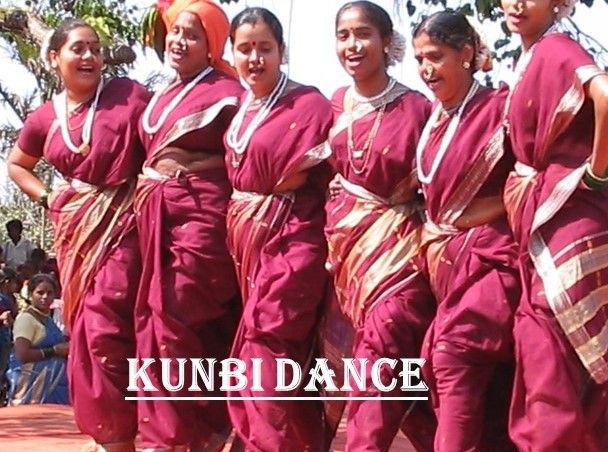
Kunbi dance is usually performed by womenfolk, though men occasionally participate. The steps are fast-paced yet graceful, marked by rhythmic coordination and elegance. Unlike religious dances, Kunbi dance is performed solely on social occasions such as weddings, harvest festivals, and communal gatherings.
Songs accompanying the dance are equally important. They narrate everyday experiences with humor, romance, and simplicity. A popular example describes: “The coy bride is filling the pitcher in the ankle-deep water of the rivulet and the fish Thigur is winking at her.”Such verses highlight the playful spirit and rural charm of the Kunbi community.
Costume and Ornamentation
Costumes add vibrancy to Kunbi dance. Women wear colorful traditional attire, simple in design yet striking in appearance. Hair is neatly tied into buns and decorated with flower garlands, symbolizing festivity. Jewelry is minimal but elegant necklaces, earrings, and bangles are commonly worn. These accessories, though modest, enhance the authenticity of the performance. The overall presentation emphasizes tradition, modesty, and cultural pride rather than extravagance.
Cultural Significance
Kunbi dance is more than entertainment; it is a social expression of unity and identity. By performing during communal events, the Kunbi people strengthen bonds and celebrate their shared heritage. Unlike many Indian folk dances tied to religious rituals, Kunbi dance remains secular, focusing on social themes and everyday life.
This makes it a unique cultural artifact, offering insights into Goa’s pre-colonial traditions. It also reflects how indigenous communities preserve their identity despite centuries of external influence.
Contemporary Relevance
In modern times, Kunbi dance continues to thrive. It is showcased at cultural festivals, heritage programs, and tourism events across Goa. The dance has become a symbol of the state’s ethnic diversity and resilience. While modernization has reshaped many aspects of Goan life, the Kunbi community’s commitment to preserving this tradition ensures that future generations remain connected to their roots.
Conclusion
Kunbi Dance is a vibrant testimony to Goa’s tribal heritage. With its graceful movements, colorful costumes, and socially themed songs, it encapsulates the spirit of the Kunbi community. More than just a performance, it serves as a cultural bridge linking past and present. In celebrating Kunbi dance, one honors the resilience, creativity, and enduring traditions of Goa’s earliest settlers.