
Introduction
Nestled in the northwestern part of Gujarat, Banaskantha district derives its name from the West Banas River, which flows through its terrain. It shares its northern border with Rajasthan and stands as the third-largest district in Gujarat, covering an expansive area of 10,400.16 sq. km. The District comprises eleven talukas, with Palanpur serving as the administrative headquarters. Other prominent talukas include Deesa, Danta, and Amirgarh. As per the 2001 Census, Banaskantha had a population of approximately 2.5 million, with a density of 233 persons per sq. km.
Geography of Banaskantha District
Banaskantha lies between 23.33° to 24.45° N latitude and 72.15° to 73.87° E longitude. The district is bordered by Marwad and Sirohi regions of Rajasthan to the north, Sabarkantha to the east, Mehsana to the south, and Patan to the west. The terrain is diverse, ranging from fertile plains to rocky hills, with the Aravalli Range and Mount Abu nearby. The district also touches the desert region near the Pakistan border, making it strategically significant.
Education in Banaskantha District
Banaskantha has made strides in education, with institutions ranging from primary schools to universities. The Sardarkrushinagar Dantiwada Agricultural University, located near Palanpur, is a prestigious center for agricultural research and education in Gujarat. The district also hosts several colleges offering courses in arts, science, commerce, and engineering, contributing to the intellectual growth of the region.
Economy of Banaskantha District
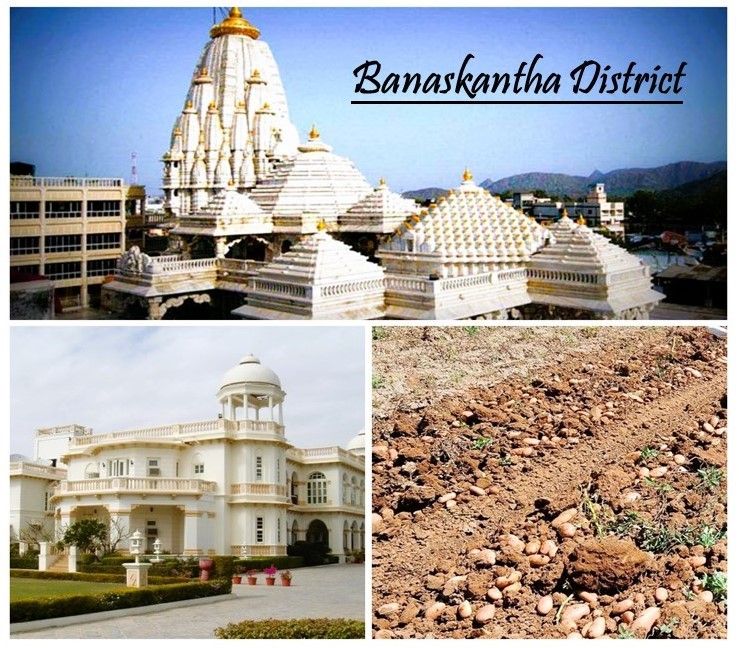
Agriculture forms the backbone of Banaskantha’s economy. The district is Gujarat’s largest producer of vegetables, with potatoes being the dominant crop. Deesa Taluka ranks first in India for potato production. Other major crops include bajra, maize, tobacco, castor oil, jowar, and psyllium. Banaskantha is also a leading producer of spices such as fennel, fenugreek, cumin, and isabgol.
Mineral resources are abundant, especially marble, granite, limestone, and china clay. Danta Taluka is renowned for high-quality marble production. The district hosts several medium and large-scale industries engaged in processing granite tiles and marble blocks. Textile and food processing industries also play a vital role in the local economy.
Tourism in Banaskantha District
Banaskantha is a treasure trove for tourists, offering a blend of spiritual, natural, and architectural attractions. From ancient temples to wildlife sanctuaries and palatial retreats, the district caters to diverse interests.
Pilgrimage Tourism
Ambaji Temple
One of the most revered shrines in Gujarat, the Ambaji Temple is dedicated to Goddess Amba and is part of the 51 Shakti Peethas. Located near the Rajasthan border, it attracts thousands of devotees annually, especially during the Bhadarvi Poonam fair.
Balaram Mahadev Temple
Situated amidst the lush Balaram forest, this temple dedicated to Lord Shiva offers a serene spiritual experience. Its proximity to the Balaram Palace makes it a dual attraction for pilgrims and leisure travelers.
Kedarnath Mahadev Temple
Located in the scenic hills of Danta Taluka, this temple is another significant Shiva shrine. Its tranquil surroundings and spiritual ambiance make it a popular destination for devotees.
Jain Temples
Banaskantha is home to several Jain temples, especially in Palanpur and nearby areas. These temples are known for their intricate architecture and spiritual significance, drawing Jain pilgrims from across the country.
Leisure Tourism
Balaram Palace
Built during the 1920s by the Nawab of Palanpur, Balaram Palace is a stunning example of neo-classical and European architecture. Surrounded by forested hills, it has been converted into a heritage hotel, offering a regal experience to visitors.
Gabbar
Gabbar Hill, located near Ambaji, is believed to be the original seat of the goddess. Pilgrims climb the 999 steps to reach the summit, where a small temple and panoramic views await.
Jessore Sloth Bear Sanctuary
This sanctuary, located in the Aravalli foothills, is a haven for wildlife enthusiasts. It is home to the endangered sloth bear, along with leopards, hyenas, and a variety of birds. The sanctuary offers trekking and nature trails for eco-tourists.
Keerti Stambh
Located in Palanpur, Keerti Stambh is a historical monument commemorating local heroes and events. It stands as a symbol of pride and heritage for the district.
Other Tourist Locales
Other notable attractions include the ancient stepwells, forts, and tribal villages that offer a glimpse into the region’s rich cultural tapestry. Seasonal fairs and festivals also add vibrancy to the local tourism scene.
Visiting Information
By Road
Banaskantha is well-connected by a network of state and national highways. Palanpur and Deesa are major road junctions, with frequent bus services to Ahmedabad, Udaipur, and other cities.
By Port
Though Banaskantha is landlocked, the nearest port access is through Kandla and Mundra, located in the Kutch district. These ports facilitate trade and transport for industrial goods.
By Rail
Palanpur Junction is a key railway station on the Delhi-Ahmedabad route. It connects the district to major cities like Mumbai, Jaipur, and Delhi. Deesa also has a railway station serving local routes.
By Air
The nearest airport is in Ahmedabad, approximately 170 km from Palanpur. Udaipur Airport in Rajasthan is another option for travelers coming from the north. Both airports offer domestic and limited international connectivity.
Banaskantha district is a compelling Blend of Natural Beauty, spiritual depth, and economic vitality. Whether you're a pilgrim seeking divine blessings, a nature lover chasing wildlife trails, or a history buff exploring palatial grandeur, Banaskantha promises a fulfilling journey through the heart of Gujarat.