
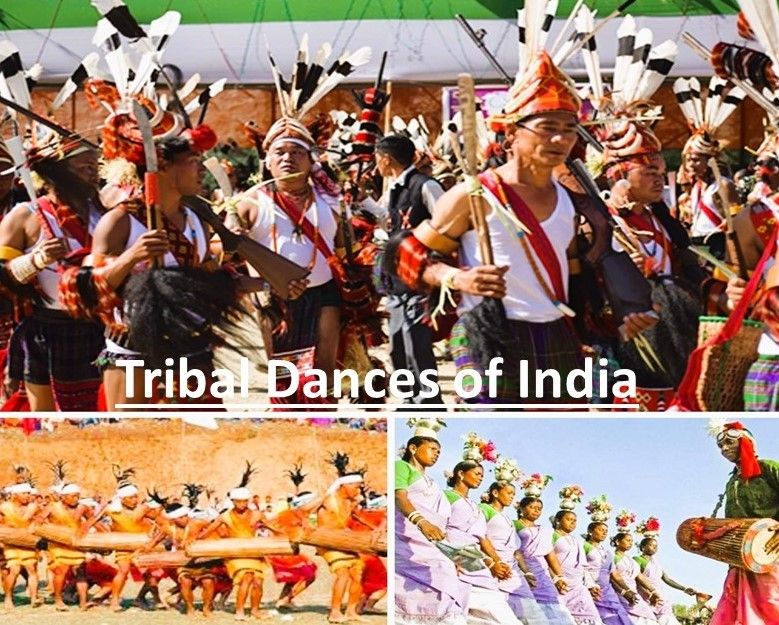
Introduction
India’s cultural fabric is woven with countless traditions, and tribal dances stand out as one of its most vibrant threads. For indigenous communities, dance is not merely entertainment it is a way of life, a spiritual practice, and a social bond. The adivasis, or tribal people, have preserved their unique identities through these dances, which differ significantly from mainstream folk performances. Each tribe’s dance reflects its connection to nature, festivals, rituals, and community life, making tribal dances living traditions that embody resilience and heritage.
Tribal Dances of North East India
The Northeastern states Assam, Meghalaya, Tripura, Mizoram, Manipur, Nagaland, and Arunachal Pradesh are renowned for their rich tribal heritage. Here, dances are deeply tied to agriculture, harvest celebrations, religious rituals, and seasonal festivals. They are occasions for unity, storytelling, and cultural expression, often performed with colorful costumes, rhythmic movements, and traditional instruments like drums and flutes.
Different Tribal Dances of North East India
- Laho Dance (Meghalaya): Performed by the Pnar tribe, this graceful dance involves two men and a woman linking arms, accompanied by humor from a comedian who entertains the audience.
- Chang Lo Dance (Nagaland): Also called Sua Lua, this energetic dance is performed during the Poanglem festival, with men dressed as warriors and women adding vibrancy with colorful attire.
- Nongkrem Dance (Meghalaya): Celebrated by the Khasi tribe, this ritual dance marks the ripening of paddy and is performed with songs and prayers.
- Wangala Dance (Meghalaya): A harvest dance of the Garo tribe, symbolizing gratitude to nature and the spirits.
- Dance of the Lotha Naga (Nagaland): Known for its martial spirit, this dance features vigorous movements and folk songs.
- Khiamniungan Dance (Nagaland): A colorful performance showcasing the vibrancy of the Khiamniungan tribe.
- Jamhang Tsouthong Dance (Nagaland): Another major dance of the Khiamniungan tribe, reflecting their cultural richness.
- Wancho Dance (Arunachal Pradesh): A festival dance performed by the Wancho tribe, highlighting community unity.
- Aji Lamu Dance (Arunachal Pradesh): A celebrated dance of the Monpa tribe, acclaimed nationally and internationally for its elegance.
- Chalo Dance (Arunachal Pradesh): Performed by the Nocte tribe, admired for its graceful movements.
- Hiirii Khaniing Dance (Arunachal Pradesh): A major festival dance of the Apatani tribe.
- Ponung Dance (Arunachal Pradesh): A traditional dance of the Adi tribe, reflecting their cultural lifestyle.
- Chawnglaizawn Dance (Mizoram): Performed by the Pawi tribe, often linked to mourning rituals.
- Zangtalam Dance (Mizoram): A musical dance of the Paite tribe, involving both men and women in colorful attire.
- Hozagiri Dance (Tripura): A mesmerizing performance of the Reang community, showcasing balance and grace with pitchers, bottles, and lamps.
- Bizu Dance (Tripura): A harvest dance of the Chakma tribe, accompanied by traditional flutes and drums.
- Hai-Hak Dance (Tripura): Performed by the Halam community, reflecting ancestral traditions.
- Kabui Dance (Manipur): A colorful dance of the hill tribes, performed with drums, knives, and heavy ornaments, symbolizing strength and beauty.
Conclusion
The Tribal Dances of North East India are more than artistic displays they are living traditions that embody the spirit, resilience, and cultural richness of indigenous communities. Each dance tells a story of harvests, festivals, rituals, or social unity, preserving heritage across generations. By celebrating these dances, India honors the diversity that defines its cultural landscape and ensures that the voices of its tribal communities continue to resonate through rhythm, movement, and tradition.