
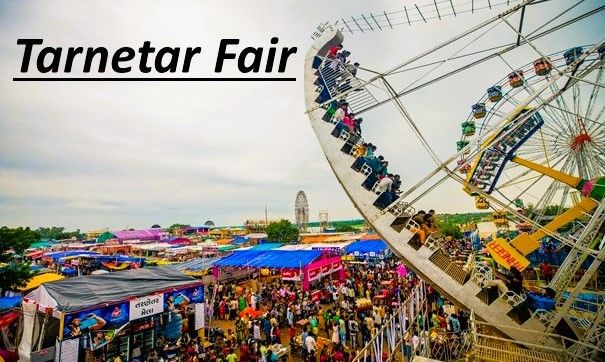
The Tarnetar Fair is among Gujarat’s most colorful and culturally significant festivals, celebrated annually in the village of Tarnetar near Thangadh in Surendranagar district. Deeply rooted in mythology, the fair commemorates the legendary Swayamvara of Draupadi, where Arjuna, the third Pandava, won her hand in marriage as narrated in the Mahabharata. This mythological connection elevates the fair beyond a cultural gathering, transforming it into a spiritual celebration of heritage.
Origins and Significance
At the heart of the fair lies the Trinetreshwar Mahadev Temple, a 14th-century shrine dedicated to Lord Shiva, the three-eyed god. Nestled on the banks of a rivulet, the temple’s shimmering reflection in the water creates a picturesque backdrop for the festivities. The fair is celebrated during Shukla Pakshaon the 4th, 5th, and 6th days, usually falling between August and September.
Historically, Tarnetar is believed to be The Site of Draupadi Swayamvara. This sacred association draws thousands of devotees and visitors, eager to witness the unique blend of devotion, folklore, and festivity.
Tribal Participation
The fair is a vibrant melting pot of communities. Tribes such as the Koli, Rabari, Bharward, Khant, Khanbi, Charan, and Kathi gather here to celebrate their traditions. Their participation adds authenticity and diversity, making the fair a living reflection of Gujarat’s cultural mosaic.
Music and Dance
The heartbeat of Tarnetar lies in its music and dance. The Rasada, performed by hundreds of women in circular formations, is accompanied by drums and the jodja pava(double flute). Devotional fervor is heightened by bhajan mandalis, groups singing hymns and kirtans with instruments like khartals, pakhawaj, dhol, and tabla.
Other notable dances include:
- Ras Garba: Men and women dance in circles, striking dandiyas in rhythm.
- Hudo Dance: Performed by shepherds, mimicking sheep clashing heads, accompanied by rhythmic clapping.
These performances embody the energy, devotion, and artistry of rural Gujarat.
Attractions Beyond Dance
The fair offers much more than music and dance:
- Food stalls serving traditional delicacies.
- Cattle shows showcasing prized livestock.
- Sports competitions and embroidery exhibitions.
The most iconic feature is the Tarnetar Chhatri(umbrella). Young bachelors decorate umbrellas with intricate embroidery, mirror work, beadwork, and lace to attract potential brides. These colorful umbrellas, adorned with handkerchiefs, symbolize love, creativity, and tradition, and remain a visual spectacle of the fair.
Tourism and Legacy
The fair attracts thousands of visitors from across India and abroad. Gujarat Tourism facilitates travel from Ahmedabad and Rajkot, even offering tented accommodations for tourists. Beyond entertainment, the fair preserves tribal traditions and promotes Gujarat’s cultural heritage on a global stage.
Conclusion
The Tarnetar Fair is more than a festival—it is a living tapestry of mythology, devotion, art, and community. From sacred rituals at the Trinetreshwar Mahadev Temple to lively dances and embroidered umbrellas, the fair embodies the essence of Gujarat’s folk spirit. It continues to enchant visitors, keeping alive the timeless story of Draupadi’s Swayamvara while celebrating the vibrant culture of Saurashtra.