
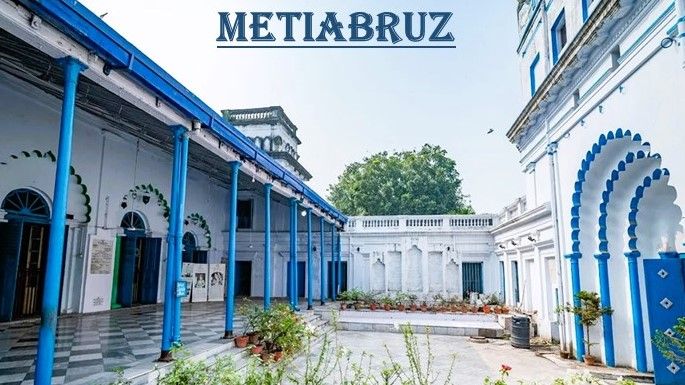
Metiabruz, located in the Garden Reach area of Kolkata, West Bengal, is a fascinating locality where history, culture, and industry converge. Often referred to as the “Second Lucknow,” this title stems from the legacy of Nawab Wajid Ali Shah of Awadh, who, after his exile in 1856, recreated the grandeur of Lucknow in this southern corner of Kolkata. Today, Metiabruz thrives as a neighborhood that reflects both its illustrious past and its dynamic present.
Location and Geography
Metiabruz lies on the southern edge of Kolkata, strategically positioned between Bartala and Rajabagan on the west, and Sicklane, BNR Colony, and Kidderpur on the east. Its proximity to the Hooghly River and the Garden Reach area enhances its accessibility and importance. Surrounded by diverse neighborhoods and industrial hubs, Metiabruz has historically been a center for trade, labor, and cultural exchange, shaping its identity as a bustling and resourceful part of the city.
Historical Significance
The history of Metiabruz is inseparable from Nawab Wajid Ali Shah, the last ruler of Awadh. After being dethroned by the British, he sought refuge in Kolkata and settled here. Determined to preserve The Charm of Lucknow, he built palaces, gardens, and cultural institutions in Metiabruz. The Imambara he established remains a landmark, symbolizing his legacy. His efforts transformed the locality into a hub of Awadhi culture, music, and cuisine, earning it the title of “Second Lucknow.”
Connectivity with Modern Kolkata
Metiabruz is well connected to central Kolkata through the Circular Garden Reach Road, which takes about 40 minutes by car. This road eventually becomes Wajid Ali Shah Road, leading to the Metiabruz Police Station and branching into arterial routes such as S. A. Farooqui Road. The locality also enjoys connectivity with Howrah via ferry and boat services across the Hooghly River. The famous Botanical Gardens of Shibpur lie just across the river, adding to its accessibility and appeal.
Economic Importance
Metiabruz is not only a historical locality but also a thriving industrial hub:
- It houses the Southern Thermal Power Station and a major water pumping station that supplies water to large parts of Kolkata.
- The Garden Reach Shipbuilders and Engineers, founded in 1884, is a prominent shipyard producing warships for the Indian Navy and Coast Guard.
- The locality is one of India’s largest textile manufacturing centers, employing thousands in garment production.
- Metiabruz is also renowned as the largest kite production center in Asia, keeping alive a traditional craft that resonates with cultural festivities.
Demographics
The population of Metiabruz is predominantly Muslim, accounting for nearly 75% of its residents. Urdu, Hindi, and Bengali are the main languages spoken here. The locality is also home to a large migrant workforce from rural West Bengal, Bihar, and Jharkhand. Many of these residents work as daily wage laborers in construction, plumbing, painting, and other trades, contributing significantly to Kolkata Informal Economy.
Conclusion
Metiabruz is more than just a locality it is a living testament to history, culture, and resilience. From Nawab Wajid Ali Shah’s vision of recreating Lucknow to its modern-day role as an industrial and cultural hub, Metiabruz embodies the diversity and dynamism of Kolkata. With its historical landmarks, thriving industries, and vibrant community life, Metiabruz continues to stand out as a unique destination that bridges the past with the present.