
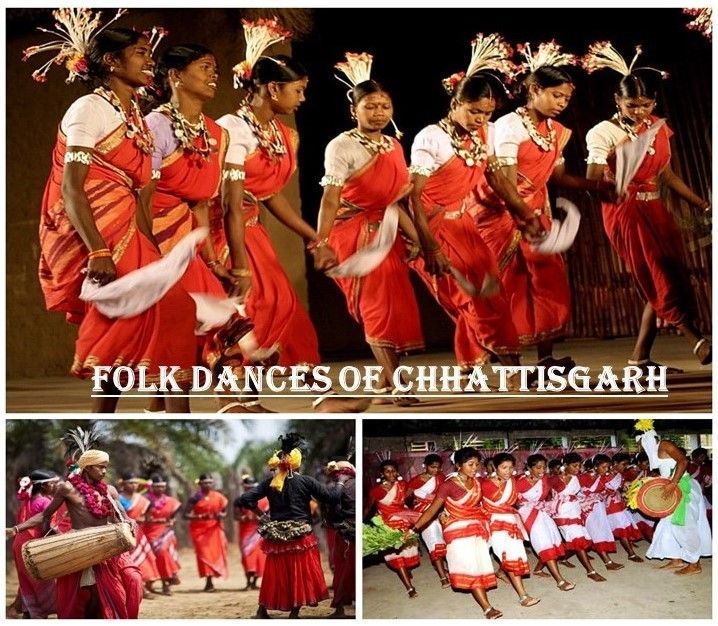
Chhattisgarh, often celebrated as the “Heart of India,” is a state that thrives on its tribal heritage, vibrant art forms, and cultural richness. Its folk dances are not mere performances but living traditions that embody spirituality, seasonal rhythms, and community life. Rooted in the practices of tribal groups who have inhabited the Bastar region for more than 10,000 years, these dances represent one of the oldest cultural legacies in India. Each community contributes its own distinctive music, attire, rituals, and dance styles, weaving together a colorful cultural mosaic that continues to flourish today.
Folk Dances as Cultural Expressions
The folk dances of Chhattisgarh are performed during festivals, marriages, harvest celebrations, and religious ceremonies. They are marked by vibrant costumes, rhythmic movements, and soulful music, reflecting the state’s age-old traditions. Beyond entertainment, these dances serve as storytelling mediums, spiritual practices, and expressions of social unity. Among them, the Saila Dance holds a special place for its variety and symbolic meaning.
Saila Dance
The Saila Dance is performed in the month of Aghan, following the harvest season. Groups of dancers visit neighboring villages, performing at households as a gesture of joy and community bonding. Traditionally, young boys from the plains of Chhattisgarh participate, celebrating the bounty of harvest with enthusiasm.
This dance is essentially a stick performance, where dancers strike small sticks against those of fellow performers in rhythmic patterns. Moving in circles—first clockwise, then anti-clockwise—they follow the beats of the Mandar drum. As the tempo rises, their movements grow faster and more energetic.
Saila has several variations, each with distinct themes, such as Baithiki Saila, Artari Saila, Thadi Saila, Chamka Kunda Saila, Chakramar Saila (Lizard’s Dance), and Shikari Saila. The climax often features the Snake Dance, where performers create intricate patterns resembling a serpent’s movements.
Karma Dance
The Karma Dance is performed by tribal groups like the Gonds, Baigas, and Oraons. It marks the transition from the rainy season to spring, celebrating fertility and nature’s abundance. With rhythmic steps and traditional songs, the dance expresses gratitude and joy for the blessings of the earth.
Sua Nacha
Known as the Parrot Dance, Sua Nacha is performed during the Goura Marriage festival. Women sing folk songs and clap rhythmically while moving in circles. This dance symbolizes love, companionship, and community bonding, highlighting the role of women in preserving cultural traditions.
Panthi Dance
The Panthi Dance is deeply spiritual and performed by the Satnami community. Closely tied to the teachings of Guru Ghasidas, the founder of the Satnami sect, it is celebrated on Maghi Purnima. The dance enacts stories of devotion, sacrifice, and moral values, making it one of the most significant cultural expressions in Chhattisgarh.
Gendi Dance
The Gendi Dance is a thrilling spectacle of agility and creativity. Performers mount bamboo stilts and skillfully move through crowds, balancing while performing acrobatic movements. Guided by the beats of tribal instruments, the dance is lively and entertaining, showcasing the daring spirit of Chhattisgarh’s tribal performers.
Conclusion
The folk dances of Chhattisgarh are more than artistic traditions they are living cultural treasures that preserve the heritage of India’s oldest tribal communities. From the energetic Saila Dance to The Spiritual Panthi Dance, and from the joyous Sua Nacha to the acrobatic Gendi Dance, each performance reflects the state’s deep connection with nature, spirituality, and community life.
These dances continue to thrive, keeping alive the rhythm of tribal heritage and offering a vibrant window into the soul of Chhattisgarh.