
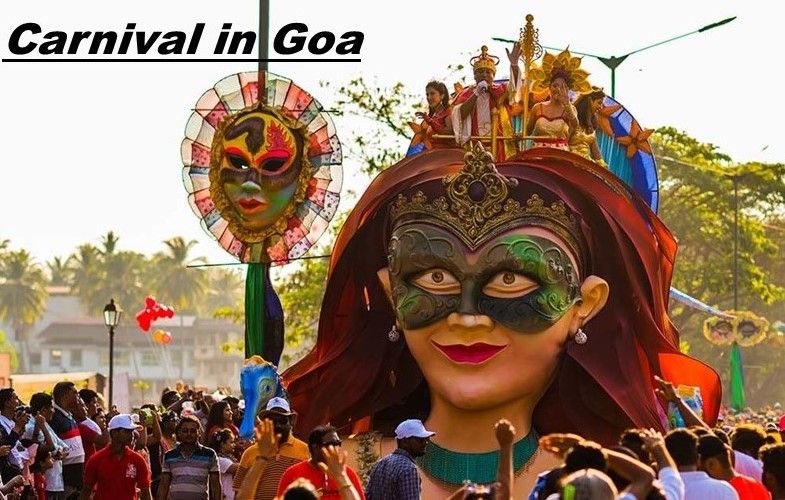
The Carnival in Goa is one of the most spectacular and eagerly awaited festivals in India. Celebrated every February, this dazzling three-day extravaganza transforms the coastal state into a vibrant land of music, dance, parades, and merrymaking. Drawing thousands of visitors from across India and abroad, the Carnival is a cultural treasure that beautifully showcases Goa’s unique blend of tradition, history, and fusion.
Origins of the Carnival
The term Carnival (or Carnaval in Portuguese) originates from the Latin phrase meaning “to take away meat.” It marks the beginning of Lent, a 40-day period of fasting and Abstinence Observed by Christians. The Portuguese, who ruled Goa for over five centuries, introduced the Carnival in the 18th century.
Its deeper roots trace back to ancient Rome and Greece, where festivals of feasting and revelry were held before solemn periods of restraint. Over time, this Portuguese tradition became woven into the cultural fabric of Goa, evolving into a celebration that is both uniquely Goan and globally inspired.
The Celebration
For three days and nights, Goa bursts into life with parades, floats, music, and dance. Streets are filled with revelers in colorful costumes, while evenings are dedicated to parties and entertainment. Guitars strum, dancers sway gracefully, and merrymaking continues endlessly.
A highlight of the Carnival is the grand float parade in Panaji, organized with the support of the State Tourism Department. Leading the parade is King Momo, a legendary figure who symbolically rules Goa during the festival. His arrival signals the start of the celebrations, with streets erupting in cheer, music, and laughter.
The final day is marked by the famous red-and-black dance hosted by Club National in Panaji, a tradition that adds elegance and charm to the festivities.
Cultural Fusion
Although primarily celebrated by Christians, the Carnival has absorbed influences from Hindu traditions, western dance forms, and local revelry. This cultural blend has turned it into a unique pageantry that reflects Goa’s diverse heritage. What began as a local celebration has now crossed state boundaries, attracting thousands of tourists eager to witness the spectacle.
Revival and Tourism
The Carnival Faced Decline during the final years of Portuguese rule. However, after Goa’s liberation in 1961, it was revived and promoted as a major cultural event. Today, it is not only a festival of feasting and merrymaking but also a significant attraction that boosts tourism. From being on the verge of fading away, the Carnival has grown into a grand celebration that showcases Goa’s spirit of joy and hospitality.
Significance
Among the many festivals celebrated in Goa, the Carnival stands out as the most awaited event. It is a time of indulgence before the solemnity of Lent, a celebration of life, music, and community. Unique to Goa and not celebrated anywhere else in India, the Carnival remains a cultural treasure that continues to thrive year after year.