
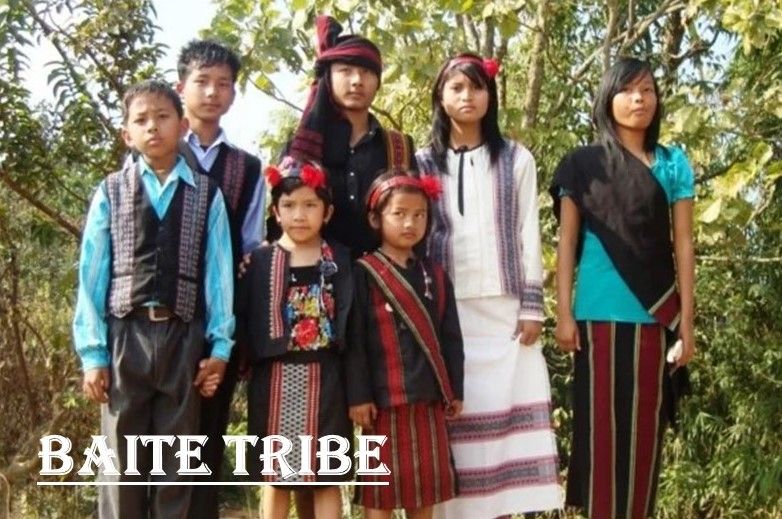
The Baite tribe, one of the significant indigenous communities of India’s northeastern frontier, has long captivated anthropologists, historians, and cultural enthusiasts. Primarily settled in The Hilly Regions of Manipur, the Baite people are recognized for their curly dark hair, medium stature, and distinctive traditions. Their identity is deeply rooted in mythology, migration, and social customs, making them an integral part of the region’s diverse cultural heritage.
Origins and Mythology
The Baite trace their ancestral origin to Khul, meaning cave. Their mythology recounts that their forebears, Songza and Zahong, once lived in a subterranean world. Zahong, determined to lead his people into the earthly realm, fought a giant serpent named Gulheopi that blocked the cave’s entrance. By slaying the serpent and cutting it into three pieces, Zahong enabled his people to emerge into the world above. This myth remains central to Baite identity, symbolizing resilience, courage, and the triumph of their ancestors over adversity.
Distribution and Demographics
Today, the Baite tribe inhabits 67 villages, with 50 located in Manipur and 17 in Assam. Their population is estimated at around 10,000, with approximately 3,500 settled in Assam and adjoining regions. In Manipur, they are concentrated in districts such as Ukhrul, Senapati, Churachandpur, Chandel, and Thoubal. This distribution reflects both their historical migrations and their adaptability to varied terrains.
Social Structure and Customs
Baite society is organized into twelve clans, each with sub-clans and lineages. Their social system is matrilineal, and marriage customs reflect this heritage. Cross-cousin marriages, known as Chongmou, are considered ideal, where a man marries his maternal uncle’s daughter. Other marriage forms include Jolgai(marriage due to premarital pregnancy) and Kijammang (marriage by elopement).
A distinctive feature of Baite marriage is the bride price, which traditionally includes eight mithuns (a type of bovine), one gong (Dak), a necklace (Khi), fine cloth for the bride’s father (Lutom), and conventional cloth for her mother (Laisui). These items symbolize respect and responsibility toward the bride’s family.
Economically, the Baite practice Lou Jhum or shifting cultivation, with rice as their staple crop. They also grow cash crops and engage in trade, reflecting a blend of subsistence farming and commercial activity.
Beliefs and Taboos
The Baite community observes numerous taboos, particularly concerning childbirth and pregnancy. Pregnant women are forbidden from consuming bear meat, crabs, guinea pig meat (Vui), and bananas. Husbands also follow restrictions, such as avoiding snake killing, rope making, or cutting Sukto. These taboos are believed to safeguard the unborn child from deformities or harm, underscoring the tribe’s deep spiritual connection to health and wellbeing.
Festivals and Ceremonies
Festivals and ceremonies form The Cultural Backbone of the Baite Tribe. Birth and name-giving rituals are celebrated with reverence. To protect newborns from evil spirits (thilha), temporary names are given before the formal naming ceremony. Traditionally, a bamboo blade was used to cut the umbilical cord, though modern practices now employ steel blades with antiseptics. These rituals highlight the tribe’s ability to preserve traditions while embracing modern health practices.
Conclusion
The Baite tribe of Manipur exemplifies the rich cultural diversity of India’s northeastern region. Their myths, social customs, agricultural practices, and festivals reflect a community deeply rooted in tradition yet open to adaptation. By preserving their heritage while engaging with modernity, the Baite continue to contribute to the vibrant cultural tapestry of the Indian subcontinent.