
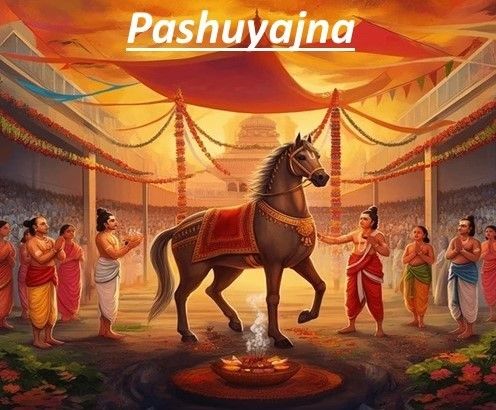
Among the five great sacrificial ceremonies of the Vedic tradition, Pashuyajna held a prominent place. This ritual, centered on animal sacrifice most notably the horse was not merely a religious act but a profound statement of royal authority, prosperity, and divine sanction. Deeply woven into the spiritual and political fabric of early Hindu society, it reflected the intertwining of cosmic order and earthly rule.
The Ashvamedha Yajna
The most renowned form of Pashuyajna was the Ashvamedha Yajna, or horse sacrifice. According to the Yajurveda, Hindu kings performed this elaborate rite to assert sovereignty, expand dominion, and ensure prosperity. It was simultaneously a spiritual offering and a political declaration of supremacy, making it one of The Most Significant Rituals in Vedic Culture.
Selection and Preparation of the Horse
The chosen horse had to be a stallion, ideally aged between twenty-four and one hundred years. Ritual purity was emphasized: the horse was sprinkled with water, and sacred mantras were whispered into its ear by the Adhvaryu priest and the sacrificer. Symbolically, if anyone obstructed the horse during its journey, they were cursed, and a dog was slain to represent punishment for sinners.
The Year-long Journey
Once consecrated, the horse was released to wander freely for a year, usually toward the northeast. Its roaming symbolized the Sun’s annual course. Guarded by a hundred noble youths, the horse’s travels tested neighboring rulers’ submission. Territories that resisted were subdued, making the ritual both spiritual and militaristic.
Rituals upon Return
When the horse returned, elaborate ceremonies followed. It was yoked to a golden chariot alongside three other horses, bathed, and anointed with ghee by the chief queen and her companions. Adorned with golden ornaments, the horse symbolized wealth and divine favor. The sacrificer then offered sacred grain to the horse, reinforcing its sanctity.
The Sacrifice
The climax involved binding the horse, along with other animals, to sacrificial stakes. Seventeen animals were tied directly to the horse, while many others were tethered nearby. The horse was then slain, and queens performed symbolic acts around its body. The chief queen enacted a fertility rite, while others recited hymns and obscenities to invoke cosmic energies.
The Aftermath
The following morning, priests purified the ritual space with the Dadhikra verse. The horse’s body was dissected, roasted, and its flesh offered to various deities. Each portion was dedicated to specific gods or cosmic principles, accompanied by cries of “all-hail.” Priests were rewarded with treasures collected during the horse’s journey, distributed according to their ceremonial roles.
Cultural Significance
The Ashvamedha Yajna was more than a religious rite—it was a statement of imperial ambition. Its grandeur is reflected in epic literature, including the Mahabharata and the Ramayana, where kings like Yudhishthira and Rama performed it to Consolidate Power and Divine Legitimacy.
Legacy
Though no longer practiced, the Ashvamedha remains a powerful symbol of ancient Indian kingship and ritual authority. It illustrates the deep connection between religion, politics, and cosmic order in Vedic society, offering insight into how rulers sought divine endorsement for their earthly reign.