
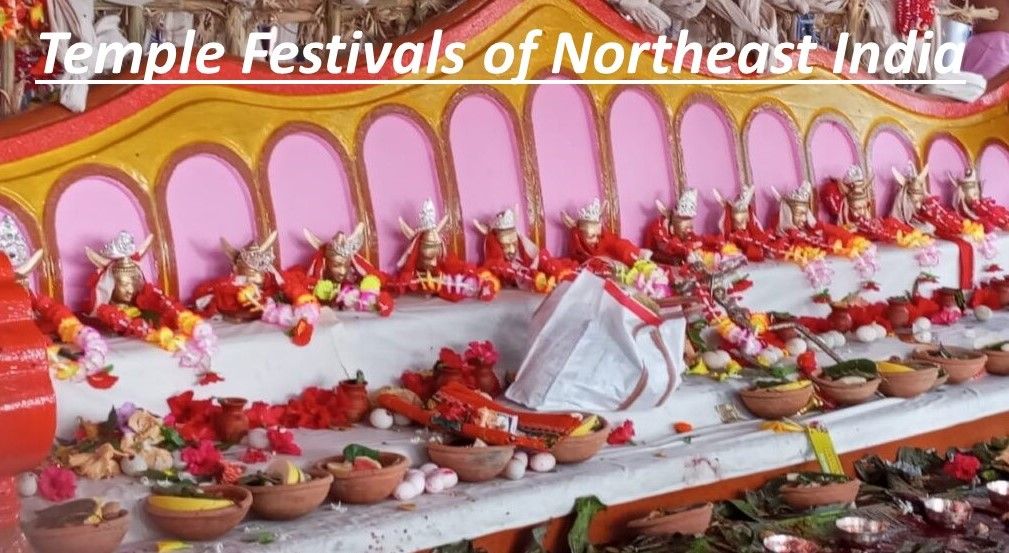
The temple festivals of Northeast India weave together threads of spirituality, tribal traditions, and cultural artistry, creating a vibrant mosaic that reflects the region’s diversity. Each state blends Hindu rituals with indigenous practices, resulting in celebrations that are not only religious but also deeply communal. These festivals showcase music, dance, and rituals that strengthen social bonds while preserving age-old traditions.
Temple Festivals of Assam
Assam is a hub of diverse temple festivities. Major Hindu observances include Durga Puja, Janmashtami, Shivaratri, Saraswati Puja, Lakshmi Puja, and Kali Puja. Alongside these, tribal communities add their own rituals. The universal Assamese festival, Bihu, incorporates temple offerings for prosperity. A Unique Highlight is Devaddhvani, held at the Kamakhya Temple in Guwahati, lasting three days from the end of Shraavana to the second day of Bhadra. Another notable event is the Manasa festival, dedicated to the Snake Goddess Manasa, revered as “Visahari,” the remover of poison.
Temple Festivals of Tripura
Tripura’s temple festivals reflect both Hindu devotion and tribal heritage. The grand Kharchi Puja involves worship of fourteen deities, collectively known as Chaturdasha Devata, at the Chaturdasha Temple near Old Agartala. Equally significant is Garia Puja, a seven-day tribal festival beginning on the last day of Chaitra, dedicated to deities Kalia and Garia.
Temple Festivals of Meghalaya
In Meghalaya, temple festivities are deeply rooted in tribal culture. The Wangala festival, celebrated by the Garo tribe, honours Saljong, the Sun God of fertility. It marks the end of agricultural toil and the arrival of a bountiful harvest, blending spirituality with vibrant cultural performances.
Temple Festivals of Manipur
Manipur’s temple festivals are renowned for their Cultural Richness. The most significant is Lai Haraoba, held in May to worship sylvan deities known as Umang Lai. Another important celebration is Cheiraoba, the Meitei New Year in April, when festive dishes are first offered to temple deities before being shared among families.
Temple Festivals of Nagaland
Nagaland’s temple festivals are primarily tribal and agricultural. The Moatsu festival, celebrated by the Ao Nagas in early May, follows the sowing season. It is a time of recreation, amusement, and temple-based cultural performances, strengthening community bonds.
Temple Festivals of Arunachal Pradesh
Arunachal Pradesh showcases a wide variety of tribal temple festivals. These include Mopin and Solung of the Adis, Boori-Bootof the Hill Miris, Losar of the Monpas, and Dree of the Apatanis. These festivals often involve dances, rituals, and animal sacrifices, reflecting the tribal lifestyle and agricultural rhythms.
Temple Festivals of Mizoram
In Mizoram, the three main religious festivals are collectively known as Kut. Chapchar Kut, Mim Kut, and Pawl Kut are associated with agricultural harmony. They are celebrated with temple ceremonies, feasts, and dances, embodying the spiritual and communal spirit of the Mizo people.
Conclusion
The temple festivals of Northeast India are more than religious observances; they are living traditions that unite communities, celebrate agricultural cycles, and preserve tribal identities. From Assam’s Kamakhya rituals to Mizoram’s Kut festivals, each state contributes to the region’s vibrant cultural mosaic. These celebrations embody the essence of spirituality, cultural diversity, and communal harmony, making Northeast India a treasure trove of living traditions.