
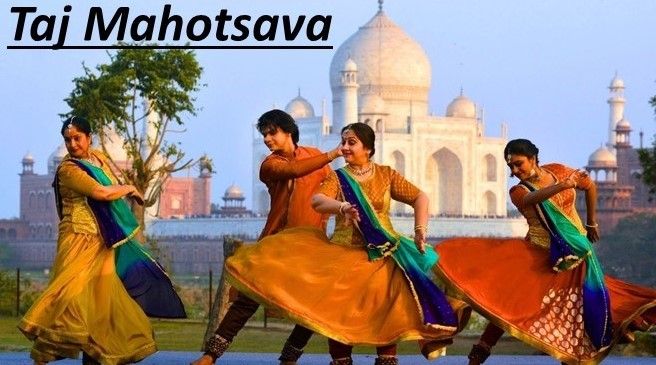
The Taj Mahotsava is one of India’s most celebrated cultural festivals, held annually in the Shilpgram region of Agra, Uttar Pradesh. Organized every February, this ten-day extravaganza showcases India’s rich traditions in art, crafts, dance, music, and cuisine. It offers visitors a chance to relive the grandeur of The Mughal Era and The Royal Lifestyle of the 18th and 19th centuries. Since its inception in 1992, the festival has steadily grown in scale and magnificence, becoming a major attraction for both domestic and international tourists.
Features of Taj Mahotsava
The festival begins with a spectacular road procession featuring decorated camels and elephants, reminiscent of Mughal victory parades. Folk dancers, drummers, and trumpet players join the procession, setting the tone for the vibrant celebrations.
A major highlight is the participation of nearly 400 artisans from across India, who display their exquisite crafts. Visitors can admire:
- Kantha stitch from West Bengal
- Hand printing from Farrukhabad
- Carpets and shawls from Kashmir and Gujarat
- Silk and zari work from Banaras
- Chikan embroidery from Lucknow
- Pottery from Khurja
- Brassware from Moradabad
- Wood carving from Saharanpur
- Marble and zardozi from Agra
- Bamboo and cane crafts from Northeast India
This diverse showcase not only preserves traditional crafts but also provides artisans with a platform to reach global audiences.
Artistic Performances
The Mahotsava is equally renowned for its spellbinding performances. Classical, semi-classical, and folk artists captivate audiences with music and dance. The Brij Bhumi performance, recreating centuries-old traditions, is a special attraction. Folk dances often invite participation from visitors, enhancing the festive spirit. The event also serves as a platform for social awareness, with the Uttar Pradesh State AIDS Control Society using folk performances to spread messages of health and prevention.
Culinary Delights
For food lovers, Taj Mahotsava is a paradise. Visitors can savor authentic delicacies from Uttar Pradesh alongside traditional dishes from across India. From Mughlai kebabs and Lucknowi biryanis to sweets and regional specialties, the festival pampers every palate.
Themes of Taj Mahotsava
Each year, the festival adopts a theme to convey A Social or Cultural Message. In 2009, the theme was Sulah Kul, meaning universal peace and harmony—a concept popularized by Emperor Akbar, who advocated respect for all religions. Such themes resonate with contemporary values, reinforcing the festival’s relevance beyond entertainment.
Fun Fair Attractions
The fun fair adds a playful dimension to the event. Roller coasters, Ferris wheels, merry-go-rounds, and train rides delight children and families, making Taj Mahotsava a wholesome experience for all age groups.
Conclusion
The Taj Mahotsava is more than a festival—it is a living showcase of India’s cultural richness. From artisan crafts and mesmerizing performances to culinary delights and family entertainment, it embodies the spirit of heritage and harmony. By reviving Mughal traditions and celebrating diverse art forms, Taj Mahotsava continues to strengthen India’s cultural identity while offering visitors an unforgettable experience in the shadow of the Taj Mahal.