
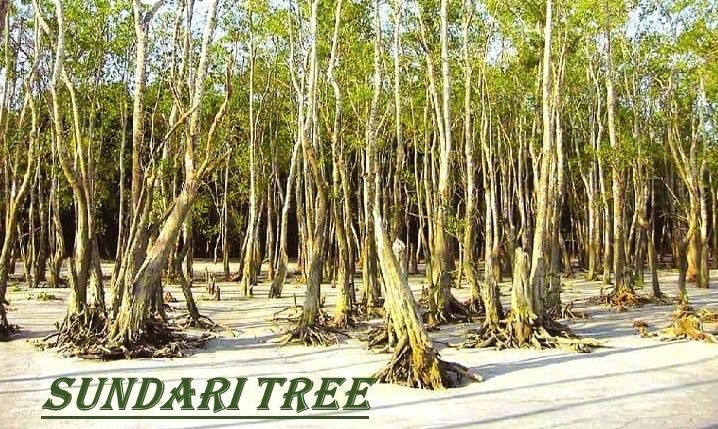
The Sundari Tree (Heritiera littoralis) is one of the most prominent mangrove species flourishing in the Sundarbans, the world’s largest mangrove forest that stretches across India and Bangladesh. Locally called “Sundari” in both Hindi and Bengali, this tree is easily recognized by The Silvery Scales on the Underside of its Leaves and its distinctive wing-shaped nuts. Its ecological and economic importance makes it a cornerstone of the Sundarbans ecosystem.
Characteristics of the Sundari Tree
The Sundari Tree is a tall, straight-trunked species that can grow up to 25 meters in height. It bears elliptic leaves, small bell-shaped flowers measuring about 5 mm, and fruits that grow in clusters. Adapted to the delicate balance of saline and freshwater, the tree thrives in the unique environment of the Sundarbans. However, this balance is fragile any increase in salinity can severely affect its growth and survival.
Uses of the Sundari Tree
For centuries, the Sundari Tree has been valued for its durable and versatile wood, serving as a vital resource for local communities. Its reddish, hard timber is widely used in:
- Timber and Charcoal: Producing high-quality charcoal and serving as a primary timber source.
- Boat Building: Its strength and resistance to water make it ideal for constructing boats.
- Furniture and Flooring: The hardwood is prized for furniture and flooring.
- Infrastructure: Used in pilings, bridges, and wharves due to its resilience.
This extensive use has made the Sundari Tree central to the local economy, though it has also left the species vulnerable to overexploitation.
Ecological Importance
Beyond its economic value, the Sundari Tree plays a crucial role in coastal ecology. Mangroves like Sundari:
- Act as natural barriers against cyclones and tidal surges.
- Prevent soil erosion by stabilizing shorelines.
- Provide breeding grounds for fish and aquatic species.
- Support biodiversity by offering shelter to countless organisms.
- Function as carbon sinks, absorbing greenhouse gases and mitigating climate change.
Thus, the Sundari Tree is not just a source of timber but a keystone species sustaining the ecological balance of the Sundarbans.
Threats to the Sundari Tree
Despite its importance, the Sundari Tree faces multiple threats:
- Climate Change: Rising sea levels and increased salinity disrupt the delicate water balance essential for mangroves.
- Top-Dying Disease: This disease has destroyed approximately 1.44 million cubic meters of Sundari trees over the past 30 years, causing losses worth nearly ₹2,000 crores.
- Overexploitation: Excessive logging for timber and charcoal has drastically reduced its population.
Together, these factors have led to a sharp decline in Sundari Tree populations, endangering both the ecosystem and the livelihoods dependent on it.
Conservation Efforts
Protecting the Sundari Tree requires urgent and coordinated action:
- Regulating Timber Harvesting: Strict controls can prevent overexploitation.
- Restoration Projects: Planting new Sundari saplings in degraded areas can help revive populations.
- Research on Top-Dying Disease: Scientific studies are essential to understand and combat this threat.
- Community Awareness: Educating local communities about sustainable practices ensures long-term protection.
- Cross-Border Cooperation: Since the Sundarbans span India and Bangladesh, joint conservation efforts are vital.
Conclusion
The Sundari Tree is more than a mangrove it is The Lifeline of the Sundarbans. Its decline signals ecological imbalance and threatens biodiversity, coastal protection, and human livelihoods. Conserving this tree is not only an ecological necessity but also a socio-economic imperative. The survival of the Sundarbans, and the millions who depend on it, rests on safeguarding the Sundari Tree for generations to come.