
Introduction
The Garasia tribe, one of the largest tribal communities in Rajasthan, has a distinctive social structure shaped by tradition, customs, and cultural practices. Their society is governed by age-old institutions, patriarchal norms, and communal values that continue to influence their way of life. Despite modernization, the Garasias have preserved their social identity, which reflects both resilience and adherence to ancestral traditions.
Governance and Social Control
The Garasia Society is controlled by the Panchayat system, with the village head, known as the Patel, holding authority over major decisions concerning the village and its people. The Patel acts as a mediator in disputes, oversees community matters, and ensures that social norms are followed. This system of governance highlights the tribe’s reliance on collective decision-making and traditional leadership rather than formal administrative structures.
Position of Women
Like many patriarchal societies, the position of women in Garasia society is relatively low. Women are not permitted to own property, and their roles are confined to domestic responsibilities. Strict rules govern their behavior, such as the requirement to veil their faces in front of senior male relatives, symbolizing modesty and respect.
Despite these restrictions, women play a crucial role in sustaining the household. Their duties include cooking, caring for children, nursing cattle, and milking animals. Men, on the other hand, engage in physically demanding tasks such as plowing fields, harvesting crops, and constructing houses. This division of labor reflects the gendered roles deeply embedded in Garasia society.
Marriage and Family System
Marriage holds significant importance in Garasia culture. Unlike many tribal groups, the Garasias allow freedom in partner selection, with young men typically marrying between the ages of 18–24 and women between 14–18. Interestingly, couples are permitted to live together without formal marriage, a practice that reflects flexibility in their social norms.
The Garasia community follows the joint family system, where sons remain with their parents until their own children reach adulthood. Intermarriage with Bhil tribes is allowed, but cross-cousin marriages are strictly prohibited. Polygamy exists in specific cases, particularly when a man’s first wife is sterile or unable to bear sons. Unfortunately, widows face severe social stigma, as they are believed to bring misfortune to the village.
Festivals and Cultural Expressions
The Garasia tribe celebrates a wide range of festivals, including Holi, Rakhi, Diwali, Navratri, Akha Teej, and Dussehra. Their most significant fair is the Siyawa-Ka-Gormela, held during Baisakhi Krishna Panchami in Siyawa village of Abu Road tehsil.
Music and dance are integral to their celebrations. Folk songs and tales narrating community values and traditions are performed during festivals. Traditional instruments such as ghoriya, kundi, harnai, and dhol accompany dances like rayan, ghumer, valar, and mandal, showcasing their vibrant cultural spirit.
Dress and Ornamentation
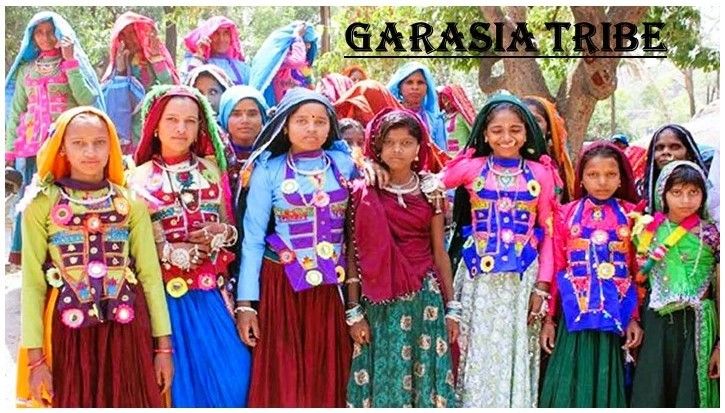
The attire of the Garasia tribe is distinctive and colorful. Women wear jhulki, gherdar ghagra, and odni, often adorned with silver ornamentsthat are popular in the community. Men are recognized by their red or white turbans, called safa or potiyu, along with angarkhi, kurta, and dhoti. Tattooing is also prevalent among Garasia women, serving as a cultural marker and symbol of identity.
Conclusion
The Society of the Garasia Tribe reflects a blend of traditional governance, patriarchal norms, and cultural vibrancy. While women face restrictions and widows endure social stigma, the community thrives on collective values, festive celebrations, and distinctive attire. Their Panchayat-led governance, joint family system, and rich cultural practices make the Garasia tribe an important custodian of Rajasthan’s tribal heritage.