
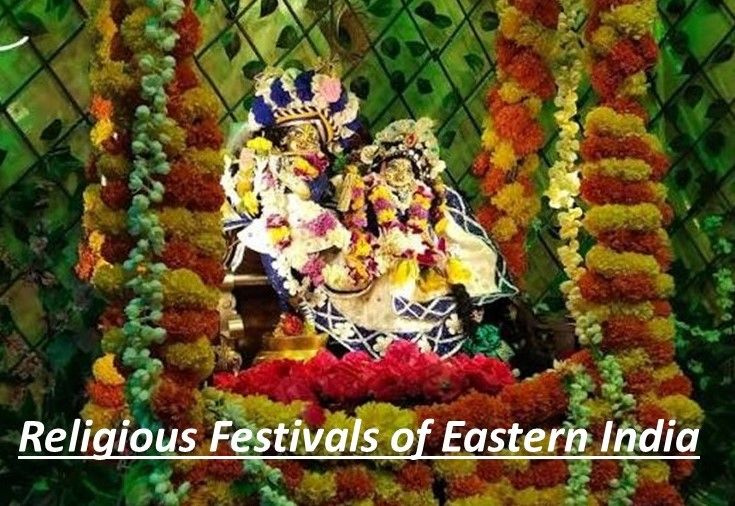
Religious festivals in Eastern India are vibrant manifestations of spirituality, tradition, and community life. They are not merely rituals but living traditions that continue to shape the cultural and spiritual identity of the region. From Bengal to Odisha, Bihar to Assam, these celebrations embody devotion, joy, and collective harmony, weaving together the diverse ethos of Eastern India.
Kalpataru Utsab
One of Bengal’s most revered festivals, Kalpataru Utsab commemorates the divine transformation of Swami Ramakrishna Paramahansa. Observed annually on January 1st, devotees gather at the Dakshineswar Kali Temple on the banks of the Hooghly River to honor this sacred event. It marks the moment when Ramakrishna was perceived as a Kalpataru — a wish-fulfilling tree — bestowing spiritual awakening upon his followers. The temple, dedicated to Goddess Kali and Lord Shiva, remains a sanctified site where Ramakrishna spent much of his life, making the festival deeply significant for millions of devotees.
Ratha Yatra
In Odisha, the grand Ratha Yatra of Lord Jagannath in Puri is a spectacular blend of devotion and cultural magnificence. Celebrated in June-July, it symbolizes renewal and rejuvenation of the deities. Gigantic chariots carrying Lord Jagannath, Balabhadra, and Subhadra are pulled by thousands of devotees, creating a breathtaking sea of faith. Unique traditions enrich the festival: the daitas, considered blood relatives of Jagannath, and the devadasis, regarded as his consorts, play vital roles in the rituals. More than a religious event, the Yatra is a cultural phenomenon that attracts pilgrims and tourists from across the globe.
Chhath Puja
Deeply rooted in Bihar’s tradition, Chhath Puja is dedicated to Surya, the Sun God. This ancient festival, also celebrated in Bengal, Odisha, Assam, and Nepal, expresses gratitude to Surya for sustaining life and seeks blessings for prosperity and longevity. The rituals span four rigorous days, involving fasting, abstaining from water, holy bathing, and offering arghya (prayers) to the setting and rising sun. Devotees stand in rivers or ponds, symbolizing purity and surrender. Chhath is believed to cure ailments and promote well-being, making it a festival of health, hope, and harmony.
Jhulan Yatra
Jhulan Yatra, celebrated in Bengal and other parts of Eastern India, honors the divine love of Lord Krishna and Radha. Known as the swing festival, it takes place in the month of Shravan, beginning on Pavitra Ekadasi and lasting until Shravan Purnima. Temples decorate swings for the deities, symbolizing joy and devotion. While some temples observe it for a single day, others extend it over five days, culminating on Balaram Purnima. Beyond ritual, Jhulan Yatra reflects the affectionate Bond Between Devotees and The Divine, reinforcing the belief that Krishna arranges situations to engage his followers in loving service.
Conclusion
The religious festivals of Eastern India are more than cultural markers; they are spiritual journeys that unite communities in devotion and joy. Whether it is the mystical transformation of Ramakrishna, the grandeur of Jagannath’s chariot, the austerity of Chhath, or the playful swings of Krishna and Radha, each festival embodies the region’s deep-rooted faith and traditions. Together, they form a vibrant tapestry on India’s religious map, showcasing the eastern flavor of spirituality and culture.