
Introduction
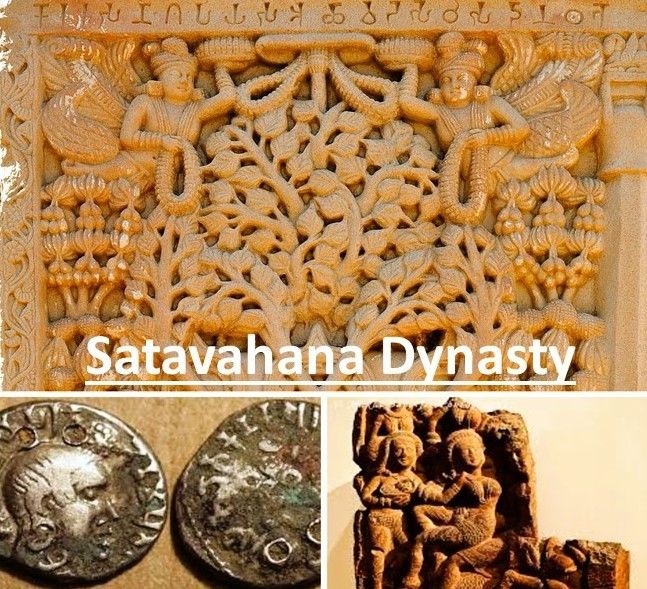
The Satavahana Dynasty, also known as the Andhra Dynasty, ruled the Deccan for nearly four centuries after the decline of the Mauryan Empire. Their reign was marked by remarkable religious diversity and tolerance. Much like the Sungas, The Satavahana Period witnessed the rise of Brahmanism, alongside the flourishing of Vaishnavism, Shaivism, and Buddhism. Inscriptions, cave monuments, and stupas from this era provide valuable insights into the religious life of the time.
Brahmanism and Vedic Sacrifices
The Satavahana rulers were patrons of Brahmanical Traditions. Numerous yajnas (sacrifices) were performed to legitimize their rule and uphold dharma. From the Navaghat inscription, we learn that sacrifices such as Agnyadhaya, Rajasuya, Aptoryama, and Ashvamedha were prevalent. King Satakarni I is said to have performed two Ashvamedha sacrifices and one Rajasuya, reinforcing his authority. Charity and dakshina (gifts) to Brahmins were common, and rituals were widely practiced across society.
Rise of Vaishnavism and Shaivism
Alongside Brahmanism, Vaishnavism and Shaivism gained prominence. Names like Vishnupalit and Vishnudatta found in inscriptions indicate devotion to Vishnu, while names such as Shivadatta, Shivabhut, and Skanda reflect worship of Shiva. Pilgrimage sites were revered, bathing in holy rivers was considered pious, and offerings to Brahmins were integral to religious life. The worship of Nandi, Nagas, and other deities also became widespread, showing the diversity of spiritual practices.
Flourishing of Buddhism
Despite the rise of Brahmanism, Buddhism thrived under Satavahana patronage. The dynasty’s tolerant attitude allowed Buddhist monks and followers to propagate their faith freely. Significant Buddhist caves and stupas were constructed at Pitalkhora, Nasik, Bhaja, Bedsa, Kuda, Amaravati, Ghantasala, and Nagarjunakonda. These included Chaityagrihas (temples) and Viharas (monastic residences). Monks typically resided in caves during the rainy season and traveled during other times to spread the teachings of the Buddha.
The Amaravati inscriptions mention sects such as the Chaityavada (Chetika), Pubbasela, and Avarasela, highlighting the diversity within Buddhism. Monks and nuns, referred to as bhikkhus, samanas, and bhikkhunis, played a vital role in teaching and guiding communities. Remarkably, even women served as teachers (upajhiyayini), with female pupils under their guidance.
Foreign Influence and Conversion
Another striking feature of the Satavahana period was the conversion of foreigners to Indian religions. Many Yavanas, Sakas, Phalanas, and Abhiras settled in the Deccan and embraced either Brahmanism or Buddhism. A notable example is Heliodorus, an ambassador to Bhagabhadra of Vidisa, who became a follower of Brahmanism. This reflects the cosmopolitan nature of Satavahana society and its openness to diverse influences.
Brahmanical Revival and Shaiva Traditions
Later Satavahana rulers, such as Gautamiputra Satakarni, strongly supported Brahmanism. He was well-versed in traditional wisdom and modeled himself after epic heroes like Rama and Arjuna. Inscriptions also reveal devotion to Shiva, with references to Kailasa and temples such as Srisailam, which became important centers of Shaiva worship. The worship of Krishna and legends of the Gopis and Radha are also found in literary works like the Saptasatakam, showing The Development of Vaishnava Traditions.
Conclusion
The Satavahana period was marked by religious pluralism and tolerance. Brahmanism, Vaishnavism, Shaivism, and Buddhism coexisted and flourished, supported by rulers and embraced by society. Foreign settlers integrated into this religious landscape, further enriching its diversity. Importantly, no evidence of religious persecution exists from this era, highlighting the Satavahanas’ commitment to harmony. Their reign thus stands as a significant chapter in India’s religious history, where faith, culture, and inclusivity thrived together.