
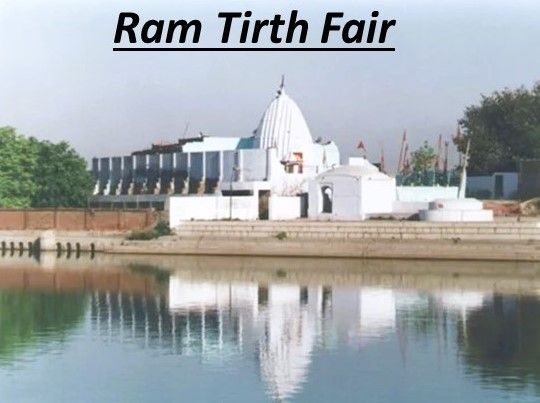
The Ram Tirth Fair is one of Punjab’s most cherished religious events, celebrated annually at the Ram Tirth Temple near Amritsar, about 11 km from the city’s western side. Commencing on the full-moon night of November, this five-day fair attracts thousands of devotees from across India. With its deep mythological roots and Vibrant Cultural Practices, the fair is both a spiritual pilgrimage and a festive gathering.
Sacred Rituals and Beliefs
At the heart of the fair lies the holy tank, believed to have been constructed by Lord Hanuman. On the auspicious night of Puranmashi, pilgrims immerse themselves in its waters, followed by circumambulation of the thirty-foot-wide tank while chanting “Ram Ram.” This ritual is considered a path to purification and divine blessings.
Women pilgrims are especially drawn to the fair, as bathing in the sacred waters of Mata Sita Di ki Baoli on the full-moon night is believed to help infertile women conceive. This practice highlights the fair’s strong cultural and spiritual significance.
Religious Congregations
The fair extends beyond the temple premises, with religious gatherings at Baba Atal, Manji Sahib, and Akal Takht. These three-day congregations feature recitations of the Granth Sahib at the Akal Takht, Darbar Sahib, and other gurdwaras near the Golden Temple, symbolizing the harmony of Sikh and Hindu traditions in Punjab.
The Legend of Ram Tirth
The temple is intrinsically linked to the Ramayana. It is believed that Sita, wife of Lord Rama, lived here during her exile in the hermitage of Rishi Valmiki. Her twin sons, Lav and Kush, were born at this site. According to legend, Valmiki composed the Ramayana here, and the battle between Rama’s soldiers and the twins also took place at Ram Tirth. This mythological connection elevates the fair’s spiritual importance.
Rituals and Offerings
The fair is marked by unique rituals. After bathing in the holy tank, devotees perform Parikrama around its three-kilometer circumference. A captivating ritual is the floating of tulla toarnas—lamps made of kneaded flour, filled with mustard oil or ghee, placed on leaf plates or reed boats, and set afloat on the tank. Accompanied by hymns and devotional songs, this ritual symbolizes purification and devotion to Lord Rama.
Charity is another integral aspect of the fair. Pilgrims are encouraged to offer alms to the needy, including handicapped individuals, lepers, and beggars, in the form of clothes, food, or money. This act of compassion reflects the fair’s emphasis on social responsibility alongside spiritual practice.
Cultural Attractions
The Ram Tirth Fair is not only about devotion but also about celebration. Magic shows, acrobatic feats, minstrel performances, and merry-go-rounds add a festive charm. Religious organizations conduct conferences, enriching the spiritual and cultural discourse.
The Grand Finale
On The Final Day, a grand procession is organized. Devotees bathe in the holy tank after the recitation of Japji Sahib and then proceed to the Golden Temple to offer prayers. Offerings such as Karah Prasad, candy drops, flowers, and parched rice are distributed among pilgrims, symbolizing divine blessings and communal harmony.
Conclusion
The Ram Tirth Fair is more than a religious gathering it is a living tradition that intertwines mythology, faith, charity, and festivity. Rooted in the Ramayana and enriched by Sikh practices, it reflects Punjab’s vibrant cultural heritage. For devotees, it is a journey of purification and devotion; for visitors, it offers a glimpse into the spiritual and social ethos of Indian society.