
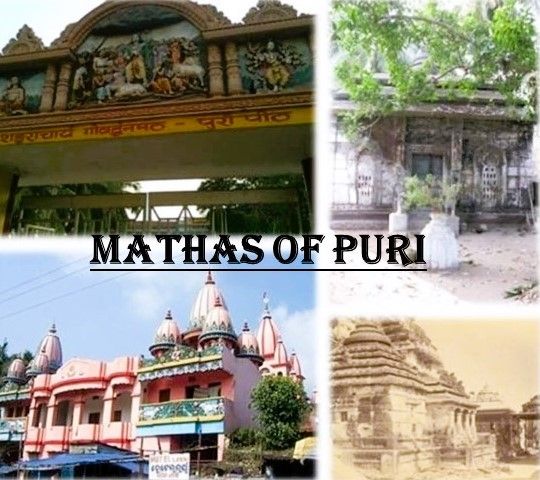
The holy city of Puri in Odisha is celebrated across the world for the majestic Jagannath Temple, yet its spiritual identity is equally defined by the enduring presence of mathas monastic institutions that have flourished for centuries. These mathas are not merely religious dwellings; they are vibrant centers of devotion, education, hospitality, and cultural preservation, making Puri a unique hub of Hindu spirituality.
Origins and Purpose of Mathas
As Puri grew into a prominent pilgrimage destination, saints, scholars, and devotees from across India flocked to the city. To serve these visitors, mathas were established with a dual mission: imparting spiritual education and offering food and shelter to travelers and beggars. Most mathas are closely tied to The Worship of Lord Jagannath, reinforcing the city’s sacred identity.
Beyond their religious role, mathas became sanctuaries during grand festivals. Communities often found spiritual homes in specific mathas — for instance, Bengalis traditionally stayed at the Gaudiya Matha, while others like Keonjhar Queen’s Monastery, Lunia Choudhury Matha, and Raja Kirti Chandra Matha catered to diverse groups of pilgrims.
Types of Mathas
The mathas of Puri are diverse in origin and function:
- Sectarian Mathas: Founded by sadhus to propagate philosophies through scripture recitation and devotional music.
- Defensive Mathas: Established for protection or as sanctuaries for wealthy patrons.
- Rajangila Mathas: Created by Gajapati kings, these mathas perform ritual services in the Jagannath Temple. Notable examples include Jagannath Ballava Matha, Raghava Das Matha, and Torani Chhatra Matha.
Functions of Mathas
The mathas collectively serve several vital roles in Puri’s spiritual ecosystem:
- Propagation of Hindu philosophy: They spread Jagannath culture and teachings.
- Shelter for pilgrims: Offering accommodation during festivals and pilgrimages.
- Support for students: Providing lodging or financial aid for learners.
- Participation in temple rituals: Many mathas play direct roles in the daily and ceremonial worship of Lord Jagannath.
Out of 752 mathas established across India, 181 continue to thrive in Puri today, safeguarding this rich tradition.
Prominent Mathas of Puri
Several mathas stand out for their historical and spiritual significance:
- Govardhan Matha: Founded by Adi Shankaracharya in the 8th century, it remains a center of monism and learning.
- Oriya Matha: Established by Atibadi Jagannath Das, author of the Oriya Bhagavata.
- Radhakanta Matha: Preserves belongings of Sri Chaitanya, who lived here for 12 years.
- Siddha Bakul Matha: Famous for its hollow Bakul tree and link to Bakreswari Pandit.
- Dashavatar Matha: Houses carvings of Krishna’s ten incarnations, linked to poet Jayadeva.
- Haridas Matha: Honors Haridas, a non-Hindu saint who became a Jagannath devotee.
Conclusion
The mathas of Puri are far more than monastic institutions; they are living embodiments of centuries of spiritual practice, cultural exchange, and service. Their enduring presence highlights Puri’s role as A Beacon of Devotion and learning in India’s religious landscape. Together with the Jagannath Temple, they form the heart of a sacred tradition that continues to inspire pilgrims and seekers worldwide.