
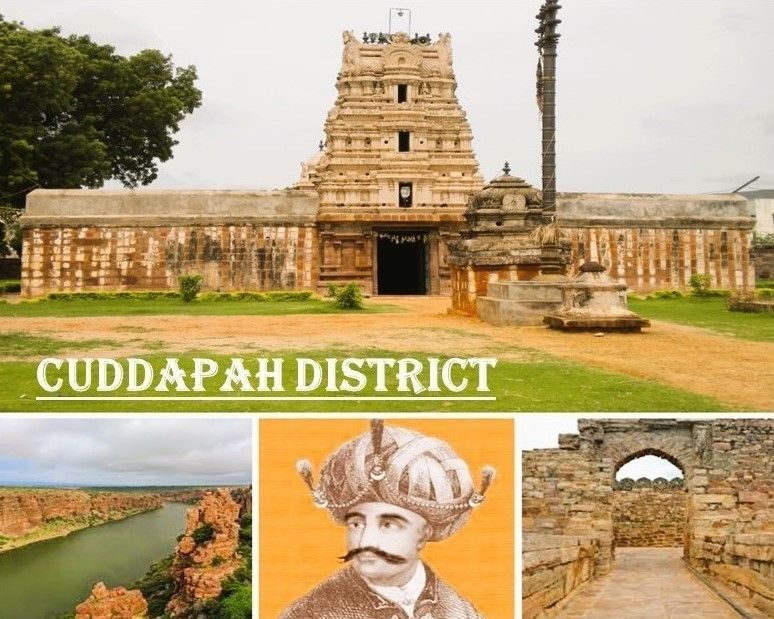
Introduction
Cuddapah, also known as Kadapa, is a district in the Rayalaseema region of Andhra Pradesh that boasts a rich historical and cultural heritage. Apart from its agricultural and industrial significance, The District is Home to Several Monuments and sites of historical interest. These monuments, primarily forts and temples, reflect the architectural brilliance and cultural depth of the dynasties that once ruled the region. Among the most notable are Gandikota Fort, Sidhout Fort, and the historic village of Tallapaka, each offering a glimpse into the district’s glorious past.
Gandikota Fort
Situated on the banks of the Pennar River, Gandikota Fort is one of the most imposing structures in Cuddapah. Its name is derived from two Telugu words—Gandimeaning gorge and Kota meaning fort. Often referred to as the “George Fort,” it is built upon a hill and guarded by a massive entrance nearly 20 feet high, with bastions towering over 40 feet.
Believed to have been constructed in the late 13th century AD, Gandikota Fort houses several places of interest within its walls:
- Ranganatha and Madhavaswamy Temples: Built during the 15th and 16th centuries, these temples are adorned with sculptures and reflect the Vijayanagara architectural style.
- Juma Masjid: A large mosque that stands beside a granary, once used to store food during sieges.
- Pigeon Tower and Palace: Structures with plastered decorations, offering a glimpse into medieval artistry.
- Panoramic Views: From the top of the tower, visitors can enjoy breathtaking views of forests and valleys.
Nearby, the Mylavaram Dam adds to the charm of the area, making it a popular picnic spot with sparkling waters and lush greenery. Gandikota is located about 77 kilometers from Cuddapah town.
Sidhout Fort
Another significant monument is the Sidhout Fort, located on the banks of the Pennar River and covering an area of 30 acres. Built in 1303 AD, the fort is known for its majestic gateways, embellished pillars, and intricate carvings of Gajalakshmi at the top.
Key features of the fort include:
- 17 Square Bastions: Once used to protect the fort, they remain impressive even today.
- Ancillary Passage: A unique feature allowing entry when the main gates were closed.
- Temples Inside the Fort: The fort houses beautifully sculpted temples such as Siddheswara, Bala Brahma, Ranganayaka Swamy, and a Durga temple, attracting numerous pilgrims.
Often referred to as the gateway to Srisailam or Dakshina Kasi, Sidhout Fort is located near Siddhavatam, about 25 kilometers from Cuddapah.
Tallapaka
The village of Tallapaka holds immense cultural and literary significance as the birthplace of Vaggeyakara Annamacharya, one of the greatest religious poets of Andhra Pradesh. Born in 1424, Annamacharya composed over 32,000 devotional hymns (Sankeerthanas) dedicated to Lord Venkateswara of Tirumala, his family deity. These hymns, set to Carnatic music, remain popular across India.
Tallapaka is also notable for:
- Timmakka, Annamacharya’s wife, who is regarded as the first poetess in Telugu literature. She composed Subhadrakalyanam.
- The Tallapaka Poets, including Annamacharya’s descendants, who continued his literary legacy.
- Attractions such as Chennakesava and Siddeswara Temples, Srichakra, Eka Tatayya idol, and the TTD Dhyanamandir, which draw tourists and devotees alike.
Tallapaka is located 55 kilometers from Cuddapahand just 6 kilometers from Rajampet, along the Cuddapah-Chennai highway.
Conclusion
The Historical Monuments of Cuddapah District Gandikota Fort, Sidhout Fort, and Tallapaka village stand as enduring symbols of its rich heritage. These sites not only highlight the architectural brilliance of past dynasties but also showcase the district’s cultural and literary contributions. Whether it is the grandeur of Gandikota, the spiritual aura of Sidhout, or the poetic legacy of Tallapaka, Cuddapah offers visitors a journey through history, faith, and tradition, making it a significant destination in Andhra Pradesh’s cultural landscape.