
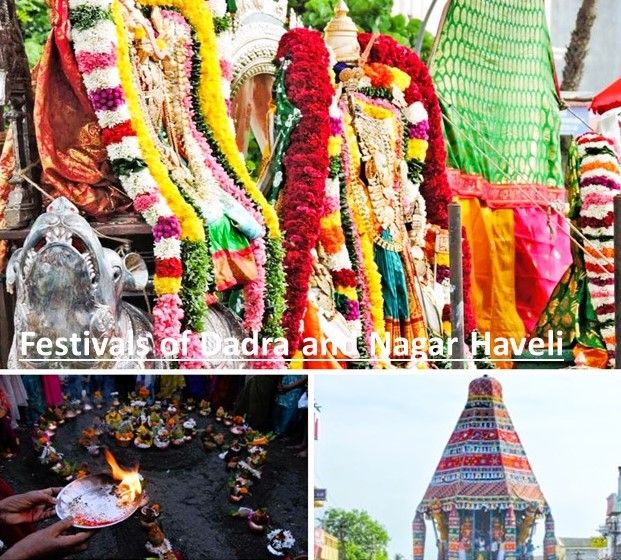
Introduction
Dadra and Nagar Haveli, a Union Territory located between Gujarat and Maharashtra, is a land of diverse communities and traditions. Its festivals reflect both mainstream Indian celebrations and unique local customs. Among the most prominent are Ganesh Chaturthi and Eid, which are observed with great enthusiasm and devotion. These festivals not only highlight the spiritual richness of the region but also foster unity and cultural harmony among its people.
Ganesh Chaturthi
Ganesh Chaturthi, dedicated to Lord Ganesha, is celebrated with grandeur in Dadra and Nagar Haveli. The festival is marked by the installation of large, creative, and eco-friendly pandals(temporary structures) that house beautifully crafted idols of Ganesha. These pandals often follow thematic designs, showcasing artistic talent and cultural imagination.
The celebrations extend over several days, during which devotees gather for prayers, bhajans (devotional songs), and cultural performances. The atmosphere is filled with joy, devotion, and community spirit. Special emphasis is placed on eco-friendly practices, with idols made from natural materials to ensure minimal environmental impact during immersion rituals.
The immersion of Ganesha idols, known as Visarjan, is a significant part of the festival. Devotees carry the idols in grand processions accompanied by music, dance, and chants of “Ganapati Bappa Morya.” This ritual symbolizes the cycle of creation and dissolution, reminding people of life’s impermanence and the importance of renewal.
Ganesh Chaturthi in Dadra and Nagar Haveli is not only a religious observance but also a cultural extravaganza that brings communities together, reinforcing values of devotion, creativity, and environmental consciousness.
Eid
The festivals of Eid-ul-Fitr and Eid-al-Adha are celebrated with deep religious devotion and joy across Dadra and Nagar Haveli. These festivals hold immense significance for the Muslim community and are observed with rituals that emphasize faith, unity, and compassion.
On Eid-ul-Fitr, which marks the end of Ramadan, special morning prayers are offered at mosques and Eidgahs. Devotees wear new clothes, greet each other warmly, and share traditional dishes such as sheer khurma, a sweet delicacy made with milk, dates, and vermicelli. The festival embodies the spirit of gratitude, charity, and brotherhood.
Eid-al-Adha, also known as the Festival of Sacrifice, commemorates the willingness of Prophet Ibrahim to sacrifice his son in obedience to God. The festival is marked by prayers, acts of charity, and the sharing of food with family, friends, and the less fortunate. It reinforces values of devotion, sacrifice, and communal harmony.
In Dadra and Nagar Haveli, Eid celebrations are not confined to religious rituals alone. They also serve as occasions for strengthening social bonds, with people from different communities joining in the festivities, reflecting the territory’s inclusive cultural ethos.
Cultural Significance
Together, Ganesh Chaturthi and Eid highlight the diversity and unity of Dadra and Nagar Haveli. While Ganesh Chaturthi emphasizes creativity, devotion, and eco-consciousness, Eid reflects compassion, gratitude, and communal harmony. Both festivals showcase the region’s ability to embrace varied traditions while fostering mutual respect and togetherness.
Conclusion
Festivals in Dadra and Nagar Haveli are more than cultural events; they are expressions of faith, identity, and community spirit. Ganesh Chaturthi, with its grand pandals and eco-friendly practices, and Eid, with its prayers, charity, and joyous gatherings, exemplify the rich cultural fabric of the Union Territory. Together, they embody the values of devotion, unity, and harmony that define the life of its people.