
North India is a vibrant mosaic of traditions where festivals are not merely occasions of joy but living expressions of cultural heritage, spirituality, and communal harmony. Stretching from the snow-clad valleys of Jammu and Kashmir to the golden sands of Rajasthan, each state celebrates its identity through fairs and festivals that unite communities and preserve age-old customs.
Festivals of Jammu and Kashmir
Set against breathtaking landscapes, the festivals of Jammu and Kashmir are uniquely picturesque. Lohri, Baisakhi, Navaratri, Maha Shivaratri, and Basant Panchami are widely observed. Distinctive to Ladakh is the Hemis Festival, a two-day celebration at Hemis Gompa, the largest Buddhist monastery. It honors Guru Padmasambhava’s birth anniversary with masked dances, plays, and handicraft exhibitions. Another highlight is the Sindhu Darshan Festival, held in Leh to pay tribute to the River Indus as a symbol of unity and respect for India’s soldiers.
Festivals of Punjab
Punjab Festivals Are Deeply Rooted in Agrarian Traditions and Sikh culture. Lohri marks the harvest season with bonfires, folk songs, and offerings of sweets. The following day, Maghi is observed with holy dips and charity, accompanied by delicacies like kheer made in sugarcane juice. Baisakhi is another major festival, celebrating the harvest of Rabi crops and the foundation of the Khalsa Panth. Devotional Guruparvs commemorate the lives and teachings of Sikh Gurus, reinforcing spiritual values.
Festivals of Haryana
Haryana’s cultural vibrancy shines through events like the Pinjore Heritage Festival, which highlights the historic Pinjore Gardens with folk dances, music, and food bazaars. The International Mango Festival and Mango Mela celebrate the state’s mango growers, offering platforms to showcase produce and adopt modern farming techniques. These festivals blend tradition with innovation, promoting both culture and agriculture.
Festivals of Rajasthan
Rajasthan’s desert landscape bursts into life with its kaleidoscope of festivals. Community-specific celebrations like Teej and Gangaur honor marital devotion and feminine grace. Statewide events such as the Desert Festival, Elephant Festival, Mewar Festival, and Camel Festival showcase folk music, dance, and traditional sports. The Jaipur Kite Festival fills the skies with vibrant kites on Makar Sankranti, while the Jodhpur Flamenco and Gypsy Festival fosters cultural exchange between Rajasthani and international artists.
Festivals of Delhi
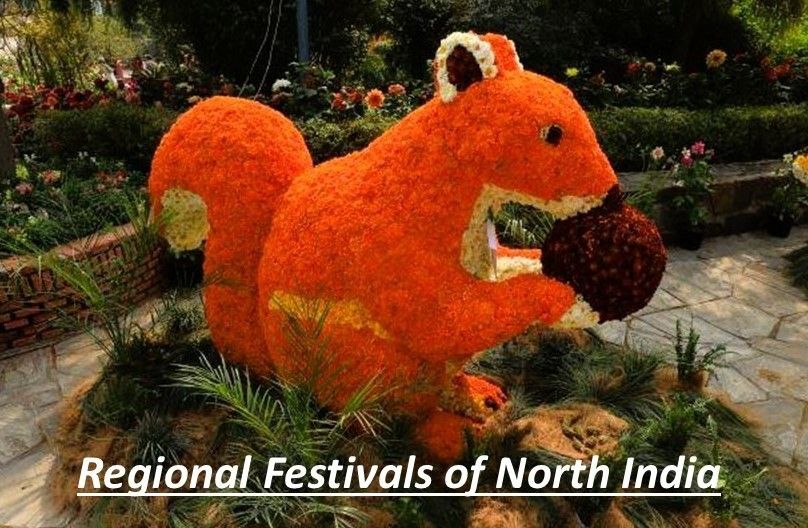
As the capital city, Delhi hosts a blend of traditional and modern celebrations. The Garden Tourism Festival is a major attraction, featuring horticultural displays, fountains, lily pools, and floral arrangements. It reflects Delhi’s cosmopolitan spirit while celebrating nature’s beauty.
Conclusion
The regional festivals of North India are more than mere celebrations; they are living traditions that preserve cultural heritage, foster unity, and connect communities to nature and spirituality. Whether it is the spiritual grandeur of Ladakh’s Hemis Festival, The Agrarian Joy of Punjab Lohri, or the colorful vibrancy of Rajasthan’s Desert Festival, each occasion stands as a testament to India’s resplendent diversity.