
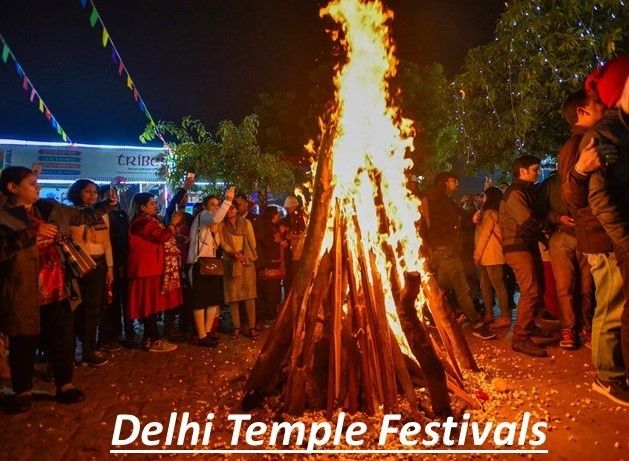
Delhi, the bustling capital of India, is not only a political and historical hub but also a city steeped in cultural and religious traditions. Among its many vibrant expressions, the temple festivals stand out as joyous occasions that blend devotion with merrymaking. These celebrations unite rituals, feasting, music, dance, and drama, making them an inseparable part of Delhi’s multicultural life.
Lohri
Lohri, observed on 13th January, marks the end of winter. Bonfires are lit, families gather to sing folk songs, and traditional dances create a warm atmosphere of community bonding.
Makar Sankranti
Makar Sankranti coincides with The Famous Kite Flying Festival. The skies above Connaught Place and Palika Bazaar are filled with colorful kites, attracting participants from across India and abroad.
Basant Panchami
Basant Panchami, celebrated in early February, welcomes spring. The Mughal Gardens at Rashtrapati Bhavan open to the public, offering a breathtaking view of blooming flowers.
Thyagaraja Festival
The Thyagaraja festival at Vaikunthnath temple showcases South Indian classical music and dance, honoring the saint-composer Thyagaraja.
Maha Shivratri
Maha Shivratri is observed with night-long vigils and prayers to Lord Shiva. Devotees fast, and unmarried women pray for blessings of a good husband.
Baisakhi
Baisakhi, celebrated in mid-April, marks the harvest season. It is a joyous occasion with fairs, dances, and temple rituals.
Buddha Jayanti
Buddha Jayanti, held on the first full moon of May, commemorates Lord Buddha’s birth, enlightenment, and nirvana. Prayer meetings are organized at Buddha Vihar and Mandir Marg.
Mahavir Jayanti
Mahavir Jayanti celebrates the birth of Lord Mahavira, the founder of Jainism. Temples host prayers and processions across the city.
Phoolkwalon-ki-Sair
Unique to Mehrauli, Phoolkwalon-ki-Sair is a flower sellers’ procession dating back to the 16th century. Floral fans are blessed at both the Jogmaya temple and the shrine of Sufi saint Khwaja Bakhtyar Kaki, symbolizing communal harmony.
Guru Purab
Guru Purab celebrates the birth of Guru Nanak. Nagar Kirtans fill the streets, and verses from The Guru Granth Sahib are recited in Gurdwaras.
Significance
Delhi temple festivals are more than religious observances; they are vibrant cultural expressions. They highlight the city’s diversity, where Hindus, Sikhs, Jains, and Buddhists celebrate their traditions side by side. These festivals foster unity, joy, and devotion, making Delhi a microcosm of India’s spiritual and social life.
In essence, the Delhi temple festivalsare not just about rituals but about community, culture, and celebration. They embody the spirit of India’s pluralism, where faith and festivity walk hand in hand.