
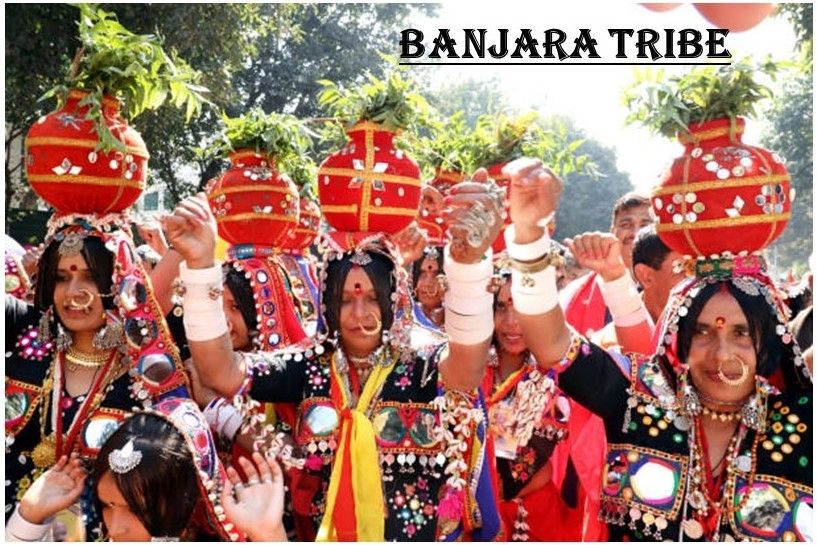
India is a land of diverse cultures and traditions, and among its many tribal communities, The Banjara tribe stands out for their vibrant costumes and elaborate adornments. The Banjara, often referred to as the nomadic gypsies of India, have a rich cultural heritage that is reflected vividly in their attire. Their costumes are not merely garments but living expressions of identity, artistry, and tradition passed down through generations.
The Vibrancy of Banjara Women’s Attire
The costumes of Banjara women are regarded as some of the most colourful and elaborate among all tribal communities of India. A typical Banjara woman’s dress consists of the ghagra (long skirt), lehenga, and choli (blouse), often heavily embroidered with mirrors, beads, and intricate threadwork. These garments are designed not only for aesthetic appeal but also to showcase the tribe’s craftsmanship and cultural pride.
The ghagra is usually made of thick, durable fabric, suitable for their nomadic lifestyle, while the choli is adorned with bright colours and mirror embellishments that sparkle under sunlight. The lehenga complements the ensemble, creating a striking visual harmony. Together, these pieces form a costume that is both practical and artistic, embodying the spirit of the Banjara woman.
Jewellery: An Integral Part of Identity
For the Banjara tribe, jewellery is not just an accessory—it is an integral part of their identity. Women wear long silver earrings, heavy necklaces, anklets, and bangles, each piece symbolizing wealth, tradition, and social status. Silver is the most common metal used, as it is believed to ward off evil and bring prosperity.
One of the most distinctive features of Banjara adornment is the use of cowries (small shells), which are patterned and woven into hair plaits. Cowries historically symbolized wealth and fertility, and their presence in hairstyles reflects both beauty and cultural symbolism. Nose rings, waist belts, and ornate headpieces further enhance the elaborate look, making Banjara women instantly recognizable for their dazzling appearance.
Men’s Costume and Simplicity
While women’s attire is elaborate, Banjara men traditionally wear simpler clothing. Their dress usually consists of a dhoti, kurta, and turban, often in plain colours. The turban, however, is an important symbol of pride and masculinity. Men may also wear ornaments, though far less elaborate than those of women. This contrast highlights the tribe’s emphasis on women as carriers of cultural expression through costume.
Cultural and Historical Significance
The costumes of the Banjara tribe are deeply rooted in their history and nomadic lifestyle. As traders and transporters in ancient times, the Banjaras traveled across regions, absorbing influences from different cultures. Their attire reflects this blend, incorporating motifs, colours, and designs inspired by various communities they interacted with.
Costumes also play a role in rituals and festivals, where women dress in their finest garments and jewellery to celebrate occasions. The elaborate attire becomes a symbol of joy, prosperity, and continuity of tradition. Moreover, the embroidery and mirror work are not just decorative but serve as storytelling devices, narrating tales of heritage and tribal identity.
Heritage and Continuity
Despite modernization, the Banjara tribe has preserved much of its traditional costume. Younger generations continue to wear these garments during cultural events, ensuring that the heritage remains alive. The costumes are now also recognized as part of India’s intangible cultural heritage, admired for their artistry and symbolism.
Conclusion
The Costume of the Banjara Tribe is more than clothing it is a living heritage that embodies their society, culture, history, and tradition. From the colourful ghagra-lehengas-choli to the silver jewellery and cowrie-adorned hairstyles, every element reflects the tribe’s identity and pride. In a world where traditions often fade, the Banjara costume stands as a vibrant reminder of India’s rich tribal legacy, weaving together threads of history, artistry, and cultural continuity.