
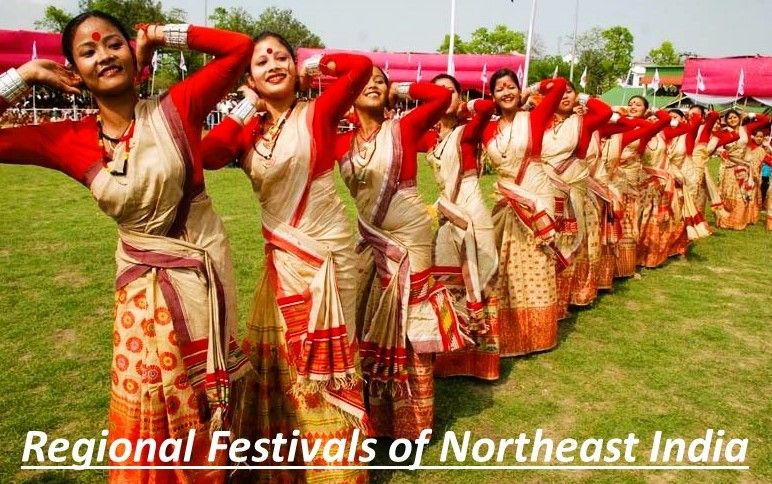
The Seven Sisters of Northeast India — Assam, Tripura, Meghalaya, Manipur, Nagaland, Mizoram, and Arunachal Pradesh — are celebrated not only for their breathtaking landscapes but also for their vibrant festivals. These events embody tribal traditions, agricultural rhythms, and spiritual beliefs, weaving together a cultural fabric that bridges ancient customs with modern communal harmony.
Assam
Assam’s festivals reflect its rich heritage and secular spirit. The most prominent is Bihu, celebrated in three forms: Bohag Bihu in April, Magh Bihu in January, and Kati Bihu in October–November. Each marks a distinct agricultural cycle and is accompanied by the lively Bihu dance. Tribal celebrations such as Rajini Gabra of the Dimasas, Baishagu of the Bodos, and Rongker of the Karbis highlight ethnic diversity. Modern events like The Elephant Festival and Brahmaputra Beach Festival showcase Assam’s unique blend of tradition and innovation.
Tripura
Tripura’s festivals are a fusion of Hindu and Buddhist traditions. Kharchi Puja and Garia Puja are significant tribal celebrations, while Diwali and Buddha Jayanti reflect broader religious practices. The Orange and Tourism Festival at Jampui Hills celebrates agricultural bounty and attracts visitors to the state’s scenic landscapes.
Meghalaya
Meghalaya is renowned for its zestful celebrations. The Jaintia Tribe Behdienkhlam involves rituals to ward off evil spirits. Shad Suk Mynsiem celebrates fertility and thanksgiving, while dance festivals such as Doregata and the Pomelo Dance highlight the community’s love for rhythm and music.
Manipur
Manipur’s festivals are deeply spiritual and artistic. Lai Haraoba is the most elaborate, combining worship of deities with traditional dance and song. Other notable celebrations include Yaosang, similar to Holi, Ningol Chakouba, which strengthens family bonds, and Cheiraoba, the Manipuri New Year.
Nagaland
Nagaland’s tribal festivals are colorful and diverse. The Moatsu and Tsungrem Mong of the Ao Nagas, Sekrenyi of the Angamis, and Bushu of the Kacharis reflect agricultural cycles and tribal unity. The grand Hornbill Festival, celebrated in Kohima every December, brings together all Naga tribes and is aptly called the “Festival of Festivals.”
Mizoram
Mizoram’s celebrations are closely tied to agriculture. Chapchar Kut, Mim Kut, and Pawl Kut mark different stages of the farming cycle. The famous Cheraw bamboo dance is a highlight, while Solakia and Mithi-rop Lam celebrate life and honor the departed.
Arunachal Pradesh
Arunachal Pradesh hosts diverse tribal festivals such as Losar (Tibetan New Year), Mopin, Solung, Boori-Boot, and Dree, each reflecting agricultural prosperity and tribal unity. The Brahmaputra Darshan Festival emphasizes the river as a symbol of social harmony and communal concord.
Conclusion
The festivals of Northeast India are not merely occasions of joy but living traditions that preserve tribal heritage, agricultural practices, and religious beliefs. They embody the spirit of unity in diversity, making the Seven Sisters a cultural treasure trove of India.