
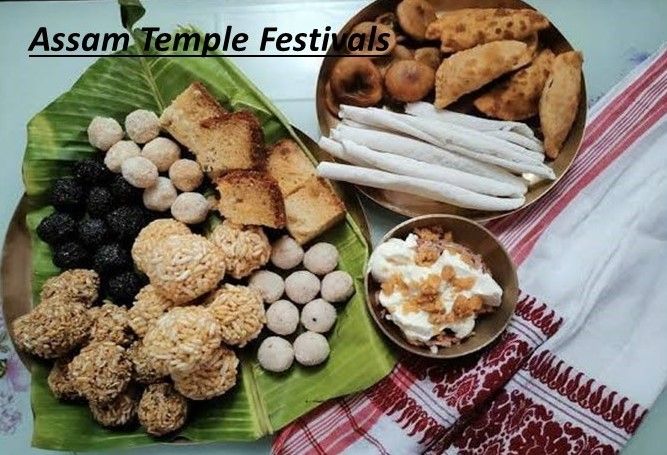
Assam, in India’s northeast, is a land where spirituality and tradition harmoniously blend with everyday community life. Its temple festivals are not confined to rituals alone; they are vibrant cultural expressions that unite Hindus, tribal communities, and Buddhists into one shared heritage. Observed across the year, these celebrations highlight Assam’s unique identity as a cultural mosaic.
Major Temple Festivals
For centuries, Assamese Hindus have celebrated temple festivals with strict ritualistic conventions. Prominent observances include Durga Puja, Daul Utsava, Janmashtami, Shivaratri, Saraswati Puja, Lakshmi Puja, and Kali Puja. Tribal communities enrich this spiritual diversity by worshipping deities such as the serpent goddess Manasa, revered in many tribal temples.
Bihu Festival
The Bihu festival, regarded as Assam’s national festival, is secular yet deeply tied to agriculture. Though not directly linked to divine worship, offerings in temples seek blessings for prosperity.
- Bahag (Baisakh) Bihu – celebrated in April, marking the Assamese New Year.
- Kati (Kartika) Bihu – observed in October, focusing on crop protection.
- Magh (Magha) Bihu – celebrated in January, marking harvest time.
In Lower Assam Districts like Goalpara and Kamrup, Bihu is called Domahi, celebrated without the traditional dancing seen in upper Assam.
Bhatheli Festival
Celebrated in the first week of Bahag, Bhatheliserves as a substitute for Bihu in certain regions. A hallmark of this festival is the vibrant fair held near temples, where villagers gather in colorful attire, creating a lively atmosphere of joy and social interaction.
Devaddhvani Festival
Held annually at the Kamakhya Temple, Devaddhvani spans three days from the last day of Sravana to the second day of Bhadra. Dedicated to the serpent goddess Manasa, worshippers from districts like Goalpara, Kamarupa, Darrang, and Nowgong participate in rituals seeking protection from diseases and epidemics. In villages such as Sualkuchi and Pasariya, celebrations extend to five days.
Rangali Utsav and Doul Yatra
Coinciding with Bohag Bihu, Rangali Utsavis celebrated in Guwahati at Srimanta Sankardeva Kalakshetra, invoking divine blessings for favorable agricultural conditions. Similarly, the Doul Yatra of Barpeta, synchronized with Holi, is celebrated within temple premises with great enthusiasm.
Pocham and Pochi
On Assam’s borders, Buddhist communities, Shans, and Burmese celebrate Pocham and Pochi in sacred sites, honoring the Buddha. These festivals highlight Assam’s cultural exchanges with neighboring regions.
Other Celebrations
Beyond these, Assam temples host grand celebrations of Durga Puja, Kali Puja, and Shivaratri. Goddess Durga is worshipped in varied forms, while Shiva temples hold special significance during Shivaratri. These festivals attract thousands of pilgrims, offering a glimpse into Assam’s rich spiritual heritage.
Conclusion
Assam’s temple festivals are more than religious rituals—they are cultural bridges that unite communities across tribal and non-tribal lines. Whether through the grandeur of Durga Puja, The Agricultural Essence of Bihu, or the mystical devotion of Devaddhvani, these celebrations embody Assam’s unique blend of faith, tradition, and festivity. Together, they make Assam not just a land of temples, but a living cultural mosaic.