
Introduction
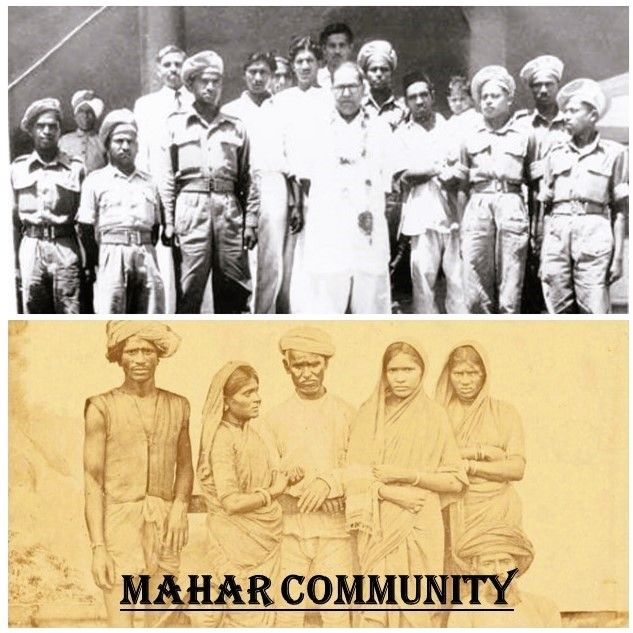
The Mahar community, one of the most prominent Dalit groups in Maharashtra, has played a transformative role in India’s social, cultural, and political landscape. Their journey from performing traditional village duties to becoming leaders in modern social reform reflects resilience, adaptation, and an unyielding quest for dignity. Over centuries, the Mahars have evolved from marginalized service providers to active participants in movements for equality, education, and justice. This article explores their history, traditions, and legacy, highlighting how The Mahar Community has shaped Indian society.
Traditional Roles in Village Life
In earlier times, the Mahar was an indispensable figure in village administration. Their responsibilities included:
- Settling land disputes by marking boundaries.
- Repairing village walls and maintaining infrastructure.
- Assisting police and officials in administrative tasks.
- Guarding village gates as watchmen.
- Summoning villagers for announcements and carrying messages.
- Providing fuel at cremation grounds and removing dead animals from the village.
These duties, though essential, were tied to their marginalized status within the caste hierarchy. Despite their contribution to rural life, Mahars were socially excluded, which laid the foundation for their later struggle for equality.
Transition to Modern Occupations
With the advent of industrialization and modernization, these traditional roles lost importance. Mahars began working in:
- Road construction and public works during urban expansion.
- Railway and dock labor in the industrial era.
- Factories and mills as industrial workers.
- Military service, continuing a tradition from the era of Shivaji and the Peshwas.
Their service in the British Army became a turning point, sparking aspirations for higher social status and collective organization. Military participation gave them exposure to new ideas and opportunities, fueling their desire for empowerment.
Early Organization and Social Awakening
By the late 19th and early 20th centuries, the Mahars began mobilizing themselves. They:
- Petitioned for re-entry into the British Army.
- Held conferences against untouchability.
- Established hostels and schools to promote education.
Education and political awareness became powerful tools, enabling them to challenge caste discrimination and demand equality. This period marked the beginning of their organized struggle for dignity and rights.
Religious and Cultural Movements
In the 1920s, the Mahars sought greater participation in Hindu religious life. They attempted to:
- Join the Ganapati festival in Bombay.
- Organize satyagrahas for temple entry in Amravati and Poona.
- Lead the Nasik Kalaram temple satyagraha (1930–1935), which, despite its failure, symbolized their determination.
Although Mahatma Gandhi also launched temple entry campaigns, the Mahars increasingly looked to Dr. B.R. Ambedkar for leadership, recognizing his vision of social justice.
Ambedkar and the Question of Religion
In 1936, Ambedkar convened a Mahar conference to deliberate on religion. After repeated failures in temple entry, he urged the community to renounce Hinduism. His powerful call inspired the Mahars to seek liberation through conversion.
On 14 October 1956, Ambedkar embraced Buddhism in Nagpur, joined by nearly five lakh followers, many of them Mahars. This mass conversion marked a historic break from caste oppression and created a new spiritual identity rooted in equality and human dignity.
Legacy and Traditions
The Mahar community’s legacy lies in:
- Challenging caste discrimination through collective struggle.
- Embracing education as a path to empowerment.
- Following Ambedkar’s vision of social justice and dignity.
- Preserving traditions while adapting to modernity.
Their transformation from village watchmen to leaders in social reform illustrates the dynamic nature of Indian society. Today, the Mahar community continues to contribute to politics, education, and culture, carrying forward Ambedkar Ideals of Equality and Human Rights.