
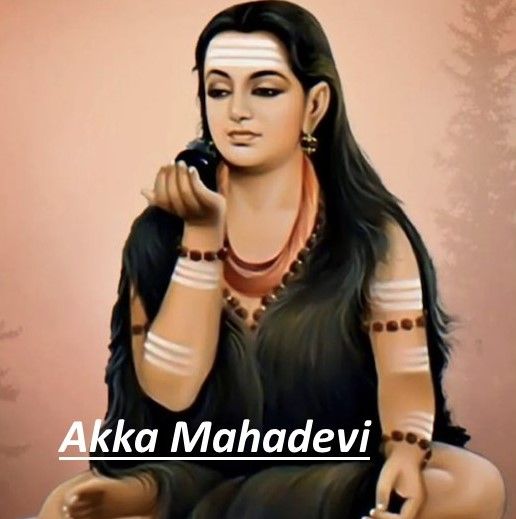
Akka Mahadevi, the 12th-century mystic poet-saint of Karnataka, occupies a unique place in Indian spiritual and literary traditions. Her life and works are celebrated not only for their devotional intensity but also for their bold challenge to social norms and her role in the discourse on female liberation.
A Saint Beyond Boundaries
Contemporary scholars regard Akka Mahadevi as a major figure in the field of women’s emancipation. She herself declared that she was a woman only in name, for her mind, body, and soul belonged entirely to Lord Shiva. Her devotion was expressed through her spiritual marriage to Chenna Mallikarjuna, whom she accepted as her eternal spouse. This symbolic union became the foundation of her life and poetry.
Defiance Against King Koushika
Her Beauty and Spiritual Aura attracted King Koushika, who sought her hand in marriage. Mahadevi initially refused, but to protect her family from the king’s threats, she reluctantly agreed. However, when the king attempted to impose his lustful desires upon her, she renounced the palace, her family, and all worldly pleasures. In an act of fearless renunciation, she walked away unclad, leaving behind jewels and garments, symbolizing her rejection of material bondage.
Search for Fellow Seekers
After leaving the palace, Mahadevi wandered in search of spiritual companionship. She eventually found solace among the sharanas, the community of seekers devoted to Lord Shiva, in Basavakalyana of Bidar district. Here, she composed numerous vachanas short, powerful verses praising the sharanas and expressing her mystical experiences.
Her association with the Veerashaiva movement marked a turning point. The movement emphasized devotion, equality, and social reform, and Mahadevi’s voice added a distinctive feminine perspective to its philosophy.
Bold Presence at Anubhava Mantapa
Mahadevi’s spiritual journey led her to the Anubhava Mantapa, a unique forum for open debate on philosophy, spirituality, and social development. Guided by the mystic Allama Prabhu, this assembly included luminaries such as Basaveshwara and Chennabasavanna.
Despite skepticism about her youth and unconventional appearance, Mahadevi spoke with confidence and clarity. Her fearless articulation of spiritual truths earned her the honorific title “Akka”, meaning “elder sister,” signifying respect and recognition within the community.
Retreat to Kadali Vana
It is believed that at the age of 25, Akka Mahadevi withdrew to Kadali Vana, near the Shrishaila temple. There, she lived in a cave, dedicating herself entirely to meditation and communion with Chenna Mallikarjuna. This final phase of her life epitomized her complete detachment from worldly existence and her immersion in divine love.
Literary and Spiritual Legacy
Akka Mahadevi’s vachanas remain a cornerstone of Kannada literature. Her verses, rich in metaphor and emotion, often portray her relationship with Shiva as that of a bride with her beloved groom. Through these poems, she conveyed the futility of worldly attachments and the bliss of divine union.
Her life and works continue to inspire discussions on spirituality, gender equality, and the power of devotion. She stands as a symbol of courage, renunciation, and liberation, transcending the boundaries of her time.
Conclusion
The Legends of Akka Mahadevi reveal a saint who defied kings, challenged societal norms, and embraced the path of divine love with unmatched conviction. Her journey from resisting King Koushika to finding refuge among sharanas and finally retreating into solitude remains a timeless testament to the strength of faith and the pursuit of spiritual truth.