
Introduction
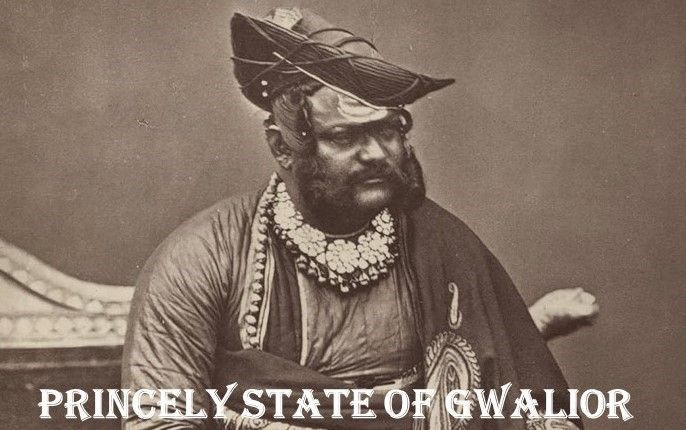
The Princely State of Gwalior, ruled by the Scindia dynasty, was one of the most prominent states in India during the British Raj. Its administration reflected A Blend of Maratha Traditions, feudal structures, and later British influences. With its vast territory divided into Malwa and Northern Gwalior, the state developed a complex system of governance that balanced central authority with local autonomy.
Administrative Divisions
The state was divided into two major subdivisions:
- Malwa Section – comprising four districts: Shajapur, Ujjain, Amjhera, and Mandsaur.
- Northern or Gwalior Section – consisting of seven districts or zilas: Narwar, Isagarh, Tonwarghar, Bhind, Bhilsa, Sheopur, and Gwalior Gird.
Each district was further subdivided into parganas, and villages were grouped into circles under the supervision of a Patwari. This hierarchical structure ensured effective revenue collection and local governance.
Central Authority: The Maharaja and the Sadr Board
The Maharaja of Gwalior was the supreme authority in the state’s administration. He was assisted by the Sadr Board, a council of seven members with the Maharaja as its president. The Board managed various departments, including:
- Post Office
- Land Records and Settlement
- Public Works
- Customs
- Revenue
- Accounts
- Forests
This system allowed the Maharaja to maintain centralized control while delegating responsibilities to specialized departments.
District Administration
In Northern Gwalior, district magistrates known as subahsoversaw governance. They reported directly to the Sadr Board and were responsible for maintaining law and order, revenue collection, and judicial functions. In Malwa, a Sar Subahsupervised the four districts, ensuring coordination and accountability.
Feudal Estates and Local Rulers
Beyond the formal administrative divisions, Gwalior also controlled numerous feudal estates. These were ruled by local kings and chiefs who retained autonomy but acknowledged the authority of the Scindias. Smaller estates, known as diwans or thakurs, were under the jurisdiction of Gwalior’s authority, particularly in regions like Sangul Wardha Agra. This arrangement reflected the layered governance system typical of princely states.
Evolution of Leadership
The administration of Gwalior was deeply influenced by the succession of Scindia rulers:
- Ranoji Sindhia (d. 1745) – Founder of the dynasty, originally an attendant of Peshwa Balaji Baji Rao, who rose to prominence by collecting chauth and sardeshmukhi in Malwa.
- Jayappa Sindhia – Succeeded Ranoji but was assassinated in 1759.
- Jankoji Sindhia – Captured and killed at the Third Battle of Panipat (1761).
- Mahadji Sindhia (1761–1794) – Revived Maratha power in North India, reorganized administration, and expanded influence.
- Daulat Rao Sindhia (1794–1827) – Grandson of Tukaji, continued the dynasty’s rule.
- Jankojirao II Sindhia (1827–1843) – A distant family member, succeeded Daulat Rao.
- Jayajirao Sindhia (1843–1886) – Oversaw modernization efforts.
- Madhav Rao Sindhia – Continued reforms and governance.
- George Jivajirao Sindhia – The last ruler before India’s independence in 1947.
Legacy of Administration
The administrative system of Gwalior combined centralized authority with local governance, reflecting both Maratha traditions and British influences. The Maharaja, supported by the Sadr Board, ensured efficient management of departments, while district magistrates and feudal rulers maintained local order.
Conclusion
The Administration of the Princely State of Gwalior was a sophisticated blend of central governance, district oversight, and feudal autonomy. It showcased the adaptability of the Scindia dynasty in managing a vast and diverse territory. Today, Gwalior, now part of Madhya Pradesh, stands as a thriving commercial hub, but its administrative legacy continues to be remembered as a vital chapter in India’s princely history.