
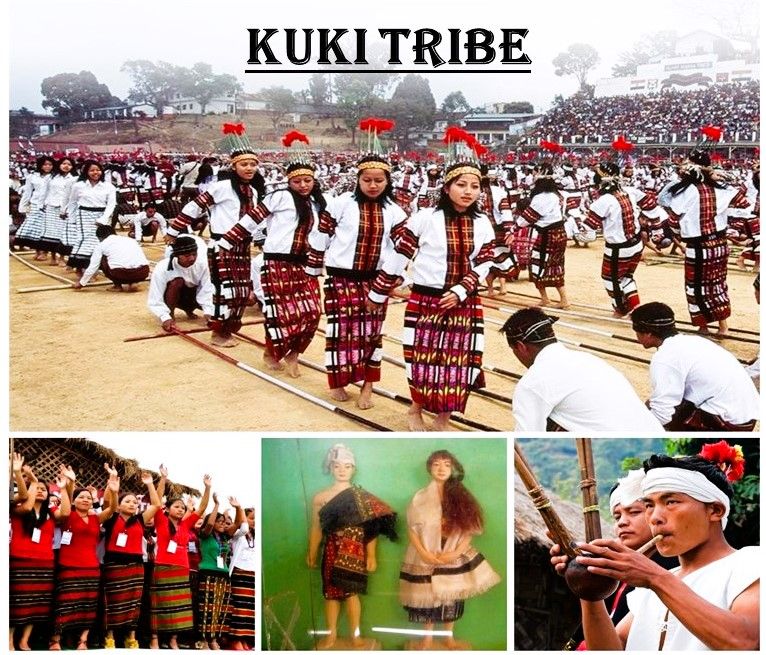
Introduction
The administration of the Kuki tribes in Manipur reflects a deeply rooted traditional structure that integrates political, social, religious, and economic institutions. At its core, the system revolves around the village, which serves as the highest political unit. Each village is governed by a chief who holds supreme authority, supported by a council of ministers, a village priest, a blacksmith, and the village labour corps. This framework ensures that governance is not limited to law and order but extends to cultural preservation, economic management, and community welfare.
Chieftainship in Kuki Administration
The institution of chieftainship is central to The Kuki Administrative System. Leadership begins with the Upa, the senior-most member of the community, revered for his wisdom and experience. The Upa is assisted by the Naopa, who is younger and less experienced but plays a vital role in administration with the Upa’s consent. Together, they oversee the council of ministers, forming the backbone of village governance.
Chieftains are custodians of customary laws and traditions. Their approval is essential for the observance of social customs, making them the guardians of cultural continuity. Each village chief administers justice, enforces executive functions, and supervises religious practices. The chief’s office, known as the Haosa, is particularly significant as it manages land allotment for cultivation. In return, villagers pay annual tributes called Changseo, symbolizing loyalty and gratitude.
The chieftainship also carries obligations. Chiefs are expected to protect villagers from external threats and ensure their welfare. This reciprocal relationship between the chief and the community mirrors Hobbes’s social contract theory, where authority is balanced by responsibility. Despite modern challenges, the institution of chieftainship remains a resilient pillar of Kuki society.
Administrative Structure of the Village
The Kuki village administration is a layered system involving several key figures:
- Upa: The senior-most leader, head of the village, and custodian of traditions.
- Naopa: The deputy to the Upa, who governs with the chief’s consent and in consultation with ministers.
- Council of Ministers (Semang-Upa or Pachong): Responsible for day-to-day governance and assisting the chief.
- Thiempu (Village Priest): Oversees religious rituals and spiritual matters, holding a revered position.
- Blacksmith: Provides essential agricultural tools, supporting the economic life of the community.
- Lawm (Village Labour Corps): Represents the workforce, comprising able-bodied villagers who contribute to communal tasks.
This structure ensures that governance is holistic, encompassing political authority, religious observance, economic sustenance, and social organization.
Activities of the Administration
The administration of the Kuki tribes emphasizes community welfare through collective participation. Division of labour is a key principle, with youth actively engaged in village work. They form groups called Lawmpi, further divided into sub-units such as Lawm-Lai, Lawm-Neo, and Lawm-Changpah, which train young volunteers in communal responsibilities.
Customs and rituals also form an integral part of administration. Practices such as Saleng (Semai), Salu (Head of the Killed Game), Changseo, Khuotha, Khuomuol, Khuojeh, Umnit, and Khouthiensuoreinforce social bonds and express gratitude to the chief. For instance, Khouthiensuo is celebrated annually with drumbeats to mark the completion of the year, while Umnit involves confinement at home during mishaps, reflecting collective solidarity.
Conclusion
The Administration of the Kuki Tribes is a unique blend of governance, tradition, and community life. Rooted in chieftainship, it integrates political authority with social customs, economic responsibilities, and religious practices. By balancing rights with obligations, chiefs ensure the welfare and unity of their people. Despite modern influences, this traditional system continues to preserve the cultural heritage of the Kuki tribes, making it a vital institution in sustaining their identity and way of life.